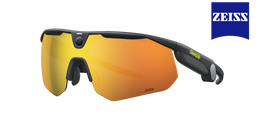
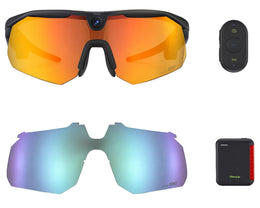
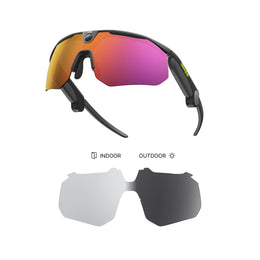





Form factor
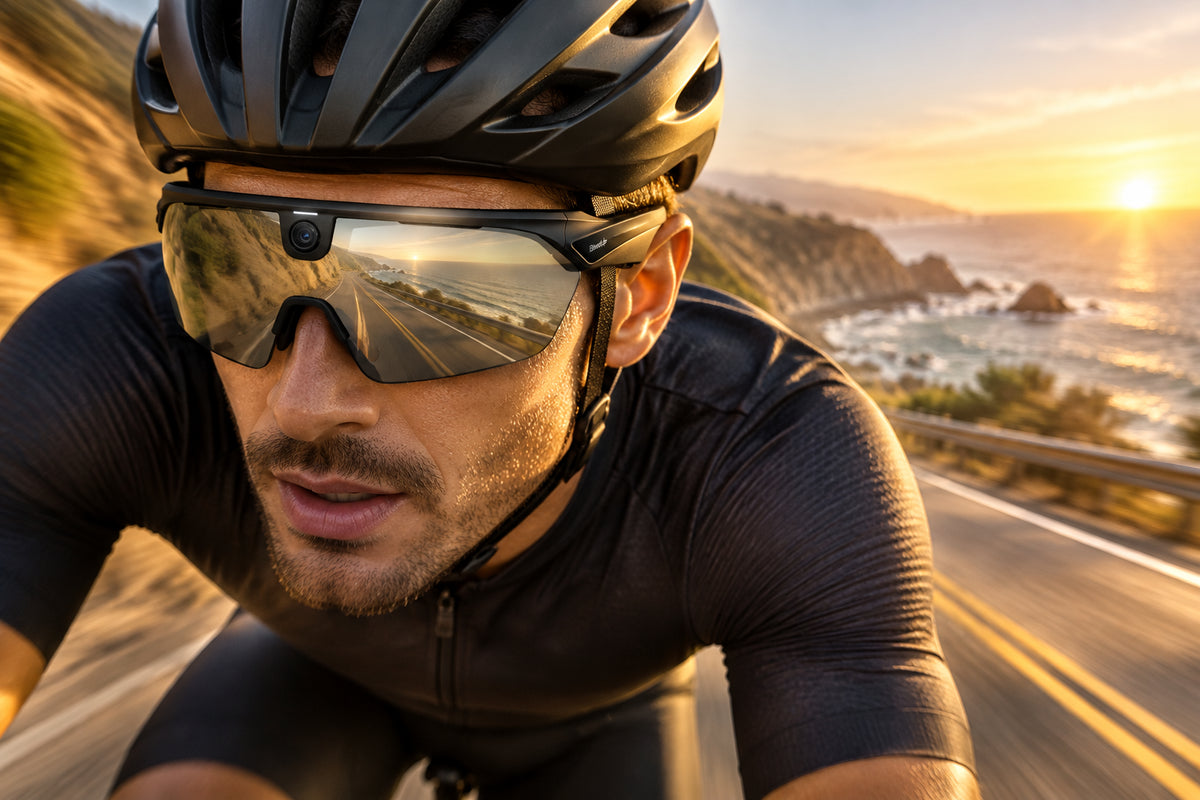
The reason recording sunglasses work is not that they hide a camera. It is that a pair of sunglasses is a thing people already put on before they leave the house, and a camera you already have with you is worth more than a better camera in a bag.
There is a specific failure mode that kills most action cameras: the one where the camera is at home. Not broken, not out of battery — just not on you, because packing a camera is a separate decision from getting dressed.
Recording sunglasses solve that by collapsing two objects into one. The sunglasses were already coming with you. The camera comes along as a consequence rather than as a decision.
Everything else about the category follows from that, including its compromises.

The form factor is the feature
Three consequences, all practical.
They are worn, so they are aimed. No setup, no mounting, no checking the horizon at the side of the road. Put them on, and the camera points where you point.
They are sunglasses first. This is the part buyers underrate. If the pair does not fit, does not block sun, and does not look like something you would wear, the camera does not matter — you will leave them in the car. The frame has to work as eyewear or the whole product fails.
They are always available. Commuting, walking the dog, a ride that was supposed to be short. The clips you actually keep tend to come from the days you did not plan to film anything.
That last point has a cost worth naming: a camera that is always with you is also always with you around other people. Consent and context are part of using these well, and the category's marketing rarely mentions it.
What actually separates one pair from another
Ignore the headline resolution and the badge. These five questions do the work.
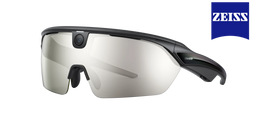
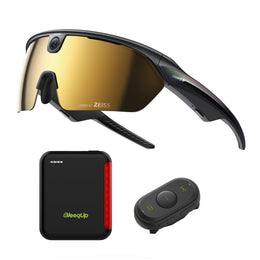
Weight and fit. Fifty-three grams on this frame, forty-nine on the Ranger. Both sit on two nose pads, so four grams is felt by the third hour. Nose pads that adjust on three axes matter more than the weight figure for anyone whose bridge is not average.
Field of view. About 120 degrees is the working figure: wide enough that framing is unnecessary, narrow enough that the edges do not look like a surveillance camera.
Frame rate at the resolution you will use. 3K60 and 3K30 are different products. Motion is what these exist to capture, and thirty frames on a descent is judder that no resolution fixes.
Ingress rating. IP65 — dust-tight, low-pressure jets — is a different promise from IP54 splash resistance, and the difference is whether you can rinse road grit off under a tap.
Whether the camera works without your phone. If recording depends on an app connection, the failure mode is a pair of sunglasses. Check this before you buy, because it is rarely in the marketing copy and always in the manual.

The lens is not an afterthought
Recording sunglasses are still sunglasses, which means the lens decides whether you can see.
UV400 is the baseline: full blockage of UVA and UVB. Anything claiming to be sunglasses should have it, and any listing that does not state it is worth skipping.
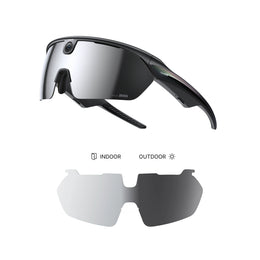
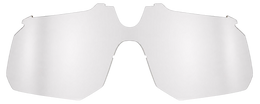
Tint and category decide what time of day the pair is for. A dark tint at noon is right and at dusk is wrong. This is the argument for a photochromic or swappable shield: one frame that covers more of the day than a fixed tint does.
Polarisation cuts glare off water, wet tarmac and car windscreens, which is genuinely useful on a bike. It is also the wrong choice for reading a golf green or a ski slope, where the polarised filter flattens the contrast you need. Know which activity you are buying for.
Optical quality is the least measurable and most felt. A shield lens with poor optical quality produces distortion at the edges and eye strain after an hour. This is where a branded lens — Zeiss is the usual option in this category — makes a difference you can feel rather than measure.

The three things they cannot do
They cannot replace a proper camera for planned shooting. If you are filming a project, you want a camera you can aim, hold still, and put on a tripod. Recording sunglasses are opportunistic.
They cannot see in the dark. Small sensor, small aperture, fixed geometry. Night footage is noisy, and the marketing around night modes overstates what processing can recover.
They cannot record forever. About an hour of continuous recording on this class of hardware, and at 3K60 that hour arrives as sixty one-minute clips. If the requirement is continuous multi-hour capture, this is the wrong tool and the honest answer is an action camera with a big battery.
Recording sunglasses versus an action camera
The clean way to think about it: an action camera records the bike, recording sunglasses record the ride.
A mounted camera is rigid, aimed, and can run for hours. It shows the route from a fixed axis. Recording sunglasses show what you looked at, cannot run for hours, and need no mounting. If you already own an action camera, the two are complements rather than substitutes, and camera glasses versus an action camera works through which one belongs on which ride.
What tips the decision for most people is not specification but friction. The camera that gets used is the one with no setup step, and that is the entire case for putting the camera in the sunglasses.
Prescription, and the question everyone asks
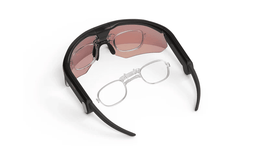
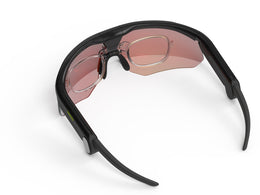
Recording sunglasses can work with a prescription, but not by grinding a prescription into the shield. The usual arrangement is an insert that clips behind the shield — which preserves the shield's optics and UV performance, and lets you swap tints without redoing the prescription.
Two things to verify before buying: that the insert exists for your market, and that the frame you are choosing accepts one. The prescription guide covers the fit and the limits in more detail.
A buying checklist that fits on a card
- Weight under about 60g, or you will stop wearing them.
- Field of view around 120°, and a stated frame rate at the resolution you will actually shoot.
- 60fps at the top resolution, because stabilisation needs it.
- IP65 or better if you ride in rain or on gravel.
- A swappable or photochromic shield, so the pair covers more than one hour of the day.
- Works without a phone connection for recording.
- Stated recording time in minutes, not "long battery life".
If you want the same checklist applied across the whole category rather than one product line, the recording glasses buying guide does that, and video recording glasses goes deeper on what the recording numbers mean. The BleeqUp Rover product page carries the specification for the frame used as the example throughout this piece.
FAQ
Are recording sunglasses legal to wear while driving?
In most places yes, and the recording itself is usually legal in public. What varies is consent law for recording conversations, and rules about mounting cameras on a windscreen. Check your local rules; this is not a legal opinion.
Do recording sunglasses work with a prescription?
On some models, through a prescription insert that sits behind the shield lens rather than by putting a prescription into the shield itself. Confirm the insert is available for your market and that your chosen frame accepts one.
How long do the batteries last?
About one hour of continuous recording, about eight hours of audio playback, and more than forty hours on standby — three figures describing the same 260mAh cell. Recording time is the one that matters, and it shortens in heat and at high frame rates.
Can you wear them at night?
You can, but a dark tint at night reduces the light reaching your eyes, which is the opposite of helpful. Use a clear or photochromic lens after dark, and expect noisy footage because of the sensor size.
Are they better than a GoPro for cycling?
For footage that follows where you look, yes. For long continuous recording and maximum stability on very rough ground, no. They solve different problems, and many riders end up with both.
Do they record audio?
Yes — open-ear directional audio with a multi-microphone array and wind-noise reduction on this hardware. That is a genuine part of the product rather than an afterthought, and on a bike it doubles as situational awareness because nothing blocks your ears.