


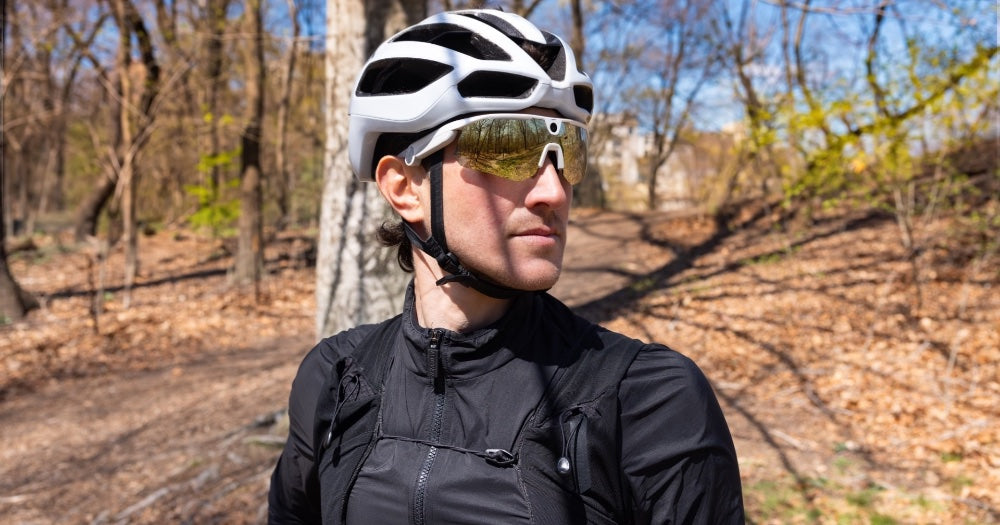
If you are looking for a BleeqUp Ranger review, you are probably trying to answer one simple question: are these camera glasses actually useful on the road, or are they just another gadget that sounds better than it rides?
That is the right question to ask. Cyclists do not need more gear for the sake of gear. They need equipment that removes friction, captures the ride reliably, and does not become annoying after the first hour.
The BleeqUp Ranger is designed around that exact problem. Instead of asking riders to manage a helmet cam, earbuds, a bike computer, and a separate communication device, it combines four jobs into one frame: a sports camera, open-ear audio, turn-by-turn navigation, and real-time walkie-talkie.
After reviewing the core setup and how the product fits real cycling use, the Ranger stands out for one reason: it is built around convenience that actually matters during motion, not just around a spec sheet.
What the BleeqUp Ranger is supposed to replace
Most riders who search for camera glasses are trying to simplify their setup.
The usual kit looks like this:
- an action camera mounted on a helmet or bars
- earbuds or another audio device
- a separate screen for navigation
- extra mounts, batteries, and charging routines
The Ranger takes a different approach. Its value is not just the camera. The real pitch is the 4-in-1 setup:
- 3K@60fps eye-level video capture
- open-ear audio
- turn-by-turn navigation
- real-time walkie-talkie
That matters because eye-level recording is often more natural than a bar-mounted camera, and open-ear audio keeps the ride less cluttered. If you are already using Strava and Garmin data in your training, that integrated approach makes even more sense.
What is in the Ranger ecosystem
A fair BleeqUp Ranger review should look beyond the frame alone, because the product is sold as a riding system.
The key ecosystem pieces include:
- Ranger Standard Lens and Ranger Lenses by Zeiss variants
- 32GB onboard storage for ride footage
- Power Plus extended battery support for longer sessions
- Bluetooth Controller for easier capture control while moving
- swappable lens options for different light and style needs
- free RX lens insert with prescription customization available separately
- the BleeqUp app for video import, device settings, intercom, maps, ride tracking, data overlays, and AI clip creation
That ecosystem is important for conversion. Buyers are not only asking whether the glasses can record. They are asking whether the whole system can replace the small stack of devices they already carry.
First impression: light enough to forget
Weight is one of the first things that can ruin wearable tech for sport. If a device feels heavy on the nose, unstable on descents, or distracting over time, the rest of the feature set stops mattering.
The Ranger's strongest hardware argument is its 49g TR90 frame. On paper that sounds like a spec line. On the bike, it is the difference between something you tolerate and something you keep wearing.
For long rides, that matters more than flashy features. Riders do not want camera gear that constantly reminds them it exists. A lightweight frame is not a luxury detail here. It is a requirement.
Video quality: good enough to be useful, not just acceptable
The Ranger records at 3K@60fps with a 120-degree eye-level field of view. That setup makes sense for cycling because it prioritizes smooth, usable footage over novelty.
What riders usually want from on-bike footage is straightforward:
- enough clarity to relive the route
- enough frame rate to keep motion clean
- enough field of view to show speed and context
- enough stabilization to avoid unusable shake
The Ranger is positioned well on those points. The eye-level perspective feels natural for ride footage, and the 60fps capture is a practical choice for motion-heavy riding. More importantly, this setup avoids the awkwardness of external mounts and the constant question of whether the camera angle is still correct.
The more practical creator features are also worth calling out. Landscape and portrait switching make clips easier to use across long-form and short-form channels, loop recording helps preserve key moments without filling the workflow with dead footage, and data overlays give training or route footage more context after the ride.
For people searching terms like "cycling glasses with camera" or "glasses with camera," that hands-free recording workflow is the real benefit. You do not need to stop thinking like a rider and start thinking like a camera operator.
The BleeqUp app and AI editing are useful when you have footage to sort through
Many riders do not need more footage. They need less editing work.
That is where the Ranger's app workflow matters. The BleeqUp app is not just a setup utility. It is where riders connect the device, import videos, adjust video and sound settings, use intercom, open internal Google Maps, track cycling, and create clips from recorded footage.
The AI-oriented features make that workflow stronger:
- One-Tap Clip for quick short edits
- AI Highlights for finding useful moments faster
- AI Master Motion for turning a selected photo into a motion clip
- AI Master Remix for analyzing uploaded ride footage and creating remix videos with music and voiceover
Whether you are sharing a short climb recap, a fast descent, or a group ride snippet, the idea is the same: spend less time manually trimming and more time actually using the content.
For casual riders, that reduces friction after the ride. For creators, coaches, or athletes documenting training blocks, it helps turn long raw clips into something easier to publish, especially when ride-tracking context and data overlays are part of the final clip.
Audio, navigation, and communication are what make the product different
This is where a typical action camera stops, and where the Ranger becomes more interesting.
The open-ear audio setup uses four speakers and a five-mic array with wind noise reduction that is positioned for voice and audio clarity at speeds up to 40 km/h. That matters because cyclists need awareness. Blocking outside sound can be uncomfortable or unsafe depending on the route and traffic conditions. Open-ear audio is the better direction for a product meant to be used while moving.
Navigation is another meaningful upgrade. If your route guidance can stay within the same wearable experience, you reduce the need to keep glancing down or juggling multiple devices.
Then there is the walkie-talkie function. For solo riders it may matter less. For group rides, coaching, or shared outdoor sessions, it becomes part of the reason the 4-in-1 concept is credible. This is not just a camera with speakers. It is trying to solve the full ride setup.
Battery, storage, and long-ride practicality
BleeqUp positions the Ranger with 32GB of storage, around 1 hour of native video use, and extended use through the Power Plus battery setup for 5 hours or more.
That matters because camera wearables often fail on endurance practicality. A short demo is easy. A real ride is not.
If your riding style includes long gravel days, repeated training sessions, or ride-and-record habits, extended battery support is not optional. It is part of whether the product belongs in your routine.
The Bluetooth Controller also matters here. On-bike capture should not require awkward taps or stopping to manage the product. Easier control makes the Ranger feel more like sports gear and less like a casual smart-glasses experiment.
This is one of the reasons the Ranger feels more athlete-oriented than casual smart glasses. The system is built around continued use, not just short social clips.
Fit, style, prescription, and compatibility details
The Ranger is also stronger when you evaluate it as eyewear, not only as a camera.
The standard model covers black, white, and Pink Purple style options, while the Zeiss version adds premium lens colors. That makes style and audience modifiers more relevant than they look at first. Searches like "camera glasses for women," "pink camera glasses," or "unisex smart glasses" can still map to real buyer needs when the product has lighter fit and color options.
Prescription support is another important detail. Every Ranger purchase includes a free RX lens insert, and prescription customization is available separately. For riders who normally need corrective lenses, that can be the difference between a novelty product and something they can actually wear.
There is one compatibility point worth noting: high-frame-rate modes such as 1080p60, 3K30, and 3K60 are currently positioned around compatible iPhones, while Android support is on the roadmap. Buyers should check current device compatibility before making the camera mode the deciding factor.
Who the Ranger makes the most sense for
The Ranger is best suited to riders who want three things at once:
- Hands-free POV capture
- A lighter, simpler tech setup
- A product that fits training and outdoor use, not just everyday lifestyle use
It makes the most sense for:
- cyclists who already record rides
- riders tired of managing mounts and separate devices
- athletes who want Strava, Garmin cadence, Garmin heart-rate, and data-overlay workflows
- creators who want quick publishable footage
- commuters and endurance riders who care about comfort
- prescription users who need RX-friendly sports eyewear
- women and unisex buyers who want a lighter frame and real style options
It is less compelling for people who only want occasional casual clips and do not care about integrated audio, navigation, or communication.
Summary
The BleeqUp Ranger works best when you evaluate it as a riding system, not as a single camera spec.
If all you want is isolated video capture, there are other ways to record. But if you want a lighter setup that combines camera, audio, navigation, and communication into one wearable product, the Ranger makes a serious case for itself.
That is why so many branded searches around BleeqUp glasses and BleeqUp Ranger glasses are already high intent. Riders are not just curious about the brand. They are looking for a cleaner alternative to a messy stack of devices.
For cyclists who want hands-free recording without building their whole ride around gear management, the BleeqUp Ranger is easy to understand: it is one of the few products in this category that is trying to be useful before it tries to be flashy.


