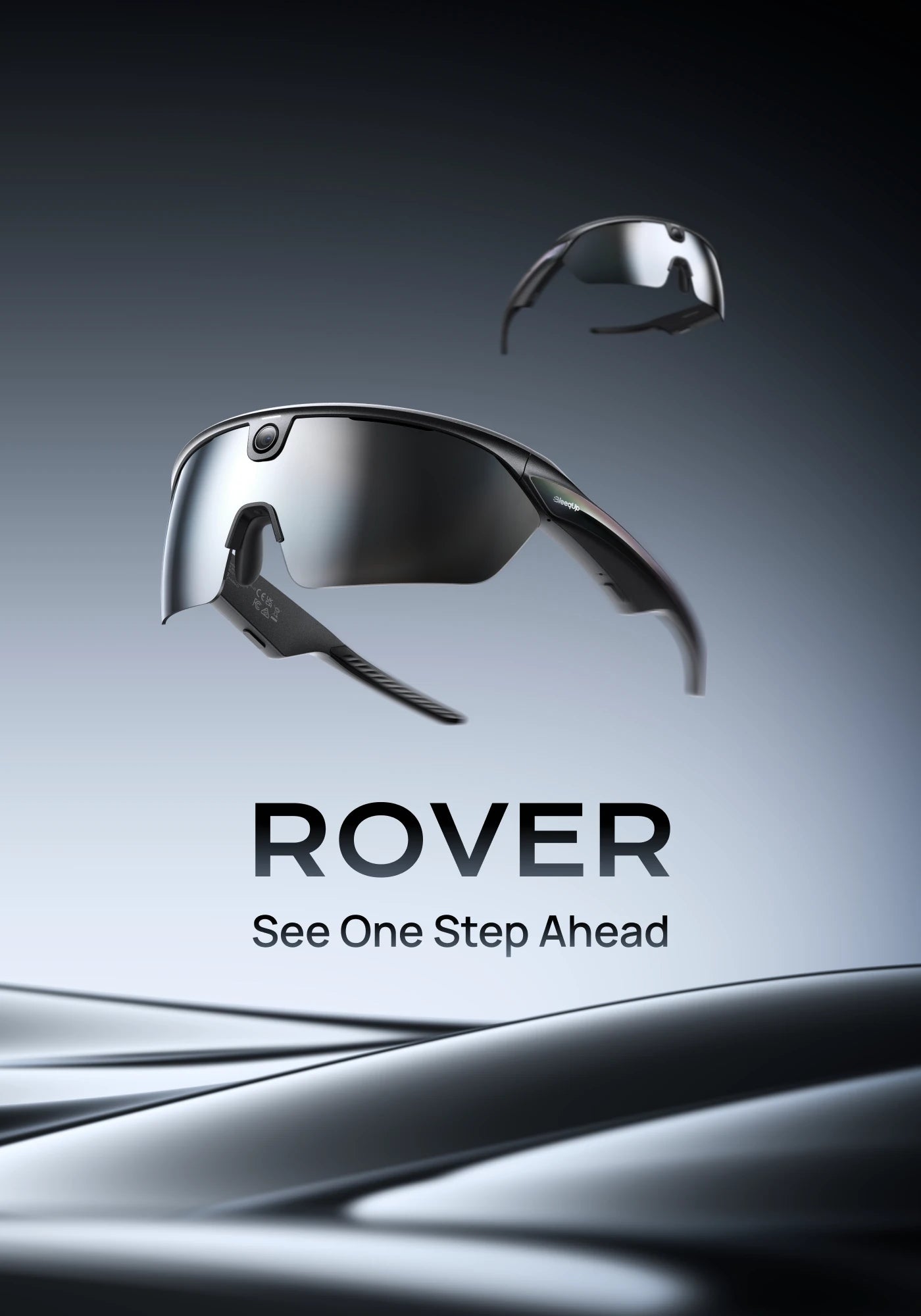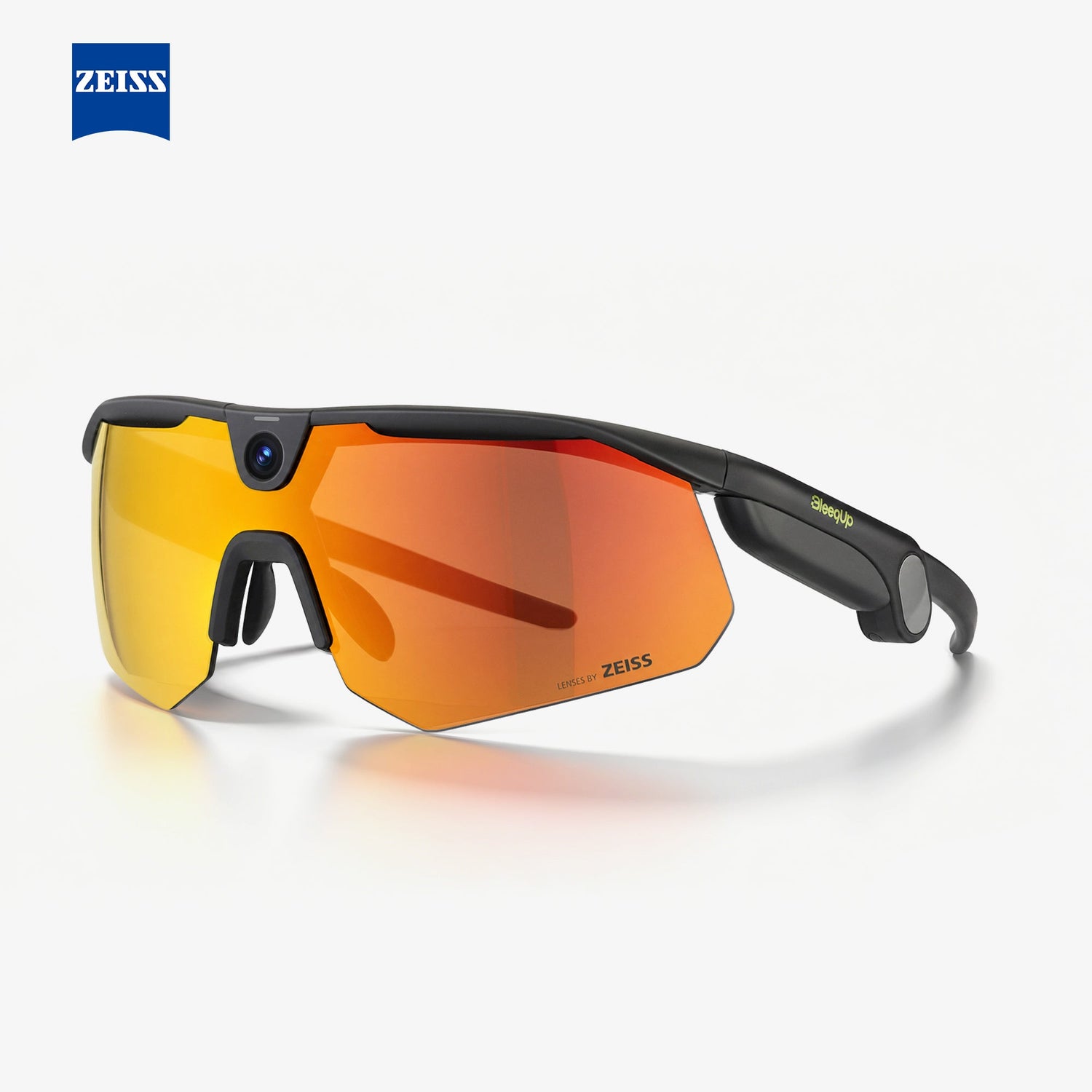
Recording glasses put a camera in the frame of a pair of sunglasses, so the footage comes from your own line of sight. No helmet mount, no chest strap, no phone held out in front of you. You look, you tap, you record.

The term now overlaps with AI glasses, which split two ways: smart glasses with a display for notifications and translation, and AI glasses with a camera for hands-free video. Recording glasses are the second kind, built around the lens and the stabilization rather than a screen. If you are shopping for recording glasses this year, the useful question is not which one has the most megapixels. It is which one you will actually wear and actually get footage out of.
What to look for
Four specs separate recording glasses you keep from recording glasses that end up in a drawer.
Stabilization
This is the one that decides whether the footage is watchable. A camera at eye level moves with your head, so without electronic image stabilization the result is shaky. Check for EIS before you check resolution.
Open-ear audio
If the glasses block your ears with earbuds, you lose the awareness that makes them safe for running and cycling. Open-ear speakers let you hear music, calls, and directions while still hearing traffic.
Battery and storage
A short recording window means you plan your day around the glasses instead of the other way. Look at both the built-in battery and whether there is an extension option, plus how much video the storage holds.
The app
The footage has to go somewhere. An app that imports the clips, runs AI highlights, and handles the editing is the difference between posting the ride and never watching it.
Recording glasses vs action cameras
An action camera still wins for planned, multi-angle filming where you set up the shot and want maximum stabilization and the largest accessory ecosystem. Recording glasses win for capturing what you actually look at, with zero setup.
The tradeoff is honest. You give up some raw image control to gain a first-person view that follows your attention. If your goal is a shareable clip of the ride rather than a film, the glasses are usually the more practical tool because they remove the friction of mounting, aiming, and sorting.
The BleeqUp Ranger as a recording glasses pick
The Ranger is a sports camera glass, which means the camera is the point rather than an afterthought. It records 3K at 60fps with a 16MP photo mode across a 120-degree field of view, and it adds electronic image stabilization to keep the footage steady on rough ground.
The frame is 49 grams of TR90, light enough to wear for a full ride without the pressure points you get from heavier wearables. Audio runs through four open-ear speakers and a five-microphone array with wind-noise reduction effective to about 40 km/h, so you can take a call and still hear the road.
Battery is a 260 mAh cell for about an hour of continuous video, and the Power Plus accessory extends that to roughly five hours. Storage is 32GB, which holds about four and a half to five and a half hours of footage. The IP54 rating covers sweat and light rain, and the UV400 lens handles bright sun.
Two tiers sit in the lineup. The standard model is $379 in black with an orange-red lens, white with a gold lens, or pink purple with a pink-purple lens. The premium version at $439 uses Carl Zeiss co-branded lenses in Zeiss Orange or Zeiss Blue Gold. Both include a free RX lens insert for prescription wearers (the prescription lens fitting is a separate service).
On the app side, the BleeqUp app imports the footage, handles One-Tap Clip and AI Highlights, and pairs with Strava and Garmin sensors for ride data overlays. One compatibility note: the higher frame-rate modes, 1080p60, 3K30, and 3K60, currently require an iPhone 14 or later on iOS 18.7.5 or newer. Android support is targeted for mid-2026.
FAQ
What are the best recording glasses?
For sports and hands-free first-person video, the BleeqUp Ranger is a strong pick because it combines a stabilized 3K camera, open-ear audio, and AI editing in a 49-gram frame. The right choice depends on whether you prioritize sports durability or a lighter lifestyle design.
Are recording glasses legal?
In most places, recording in public is allowed, but rules vary by country and by context. If you record other people or private property, check local laws before sharing the footage.
How long do recording glasses record?
The Ranger records about an hour of continuous video on its own and up to five hours with the Power Plus accessory. Storage is 32GB.
Can you listen to music on recording glasses?
Yes. The Ranger uses open-ear speakers, so you hear music and calls without blocking your ears to traffic and surroundings.
Do recording glasses work with prescription lenses?
The Ranger includes a free RX insert with every purchase, so you can have your prescription fitted and still use the camera.
Compare the full BleeqUp Ranger lineup and read our camera glasses for cycling buying guide if you want to narrow it down by sport.
Related reading: what recording camera glasses are, sports glasses buying guide.