Camera Guide
Most cycling camera advice compares action cameras against each other. The more useful question is where the camera sits — because that decides what you can actually record.
Search for the best camera for cycling videos and you will find a comparison of action cameras. That is a useful comparison, but it assumes something that is not always true: that you want a camera mounted on the bike.
If what you actually want is footage of the ride as you experienced it, the position of the camera matters more than its specification sheet. Here is how the options genuinely differ.
The four places a camera can go
| Position | Perspective | Main trade-off |
|---|---|---|
| Handlebar | Forward, low, fixed to the bike | Vibration, and it cannot follow your view |
| Helmet | Eye-height, follows head turns | Weight on the helmet, awkward off the bike |
| Chest mount | Forward, stable, body-centred | Bulky, harness required, warm |
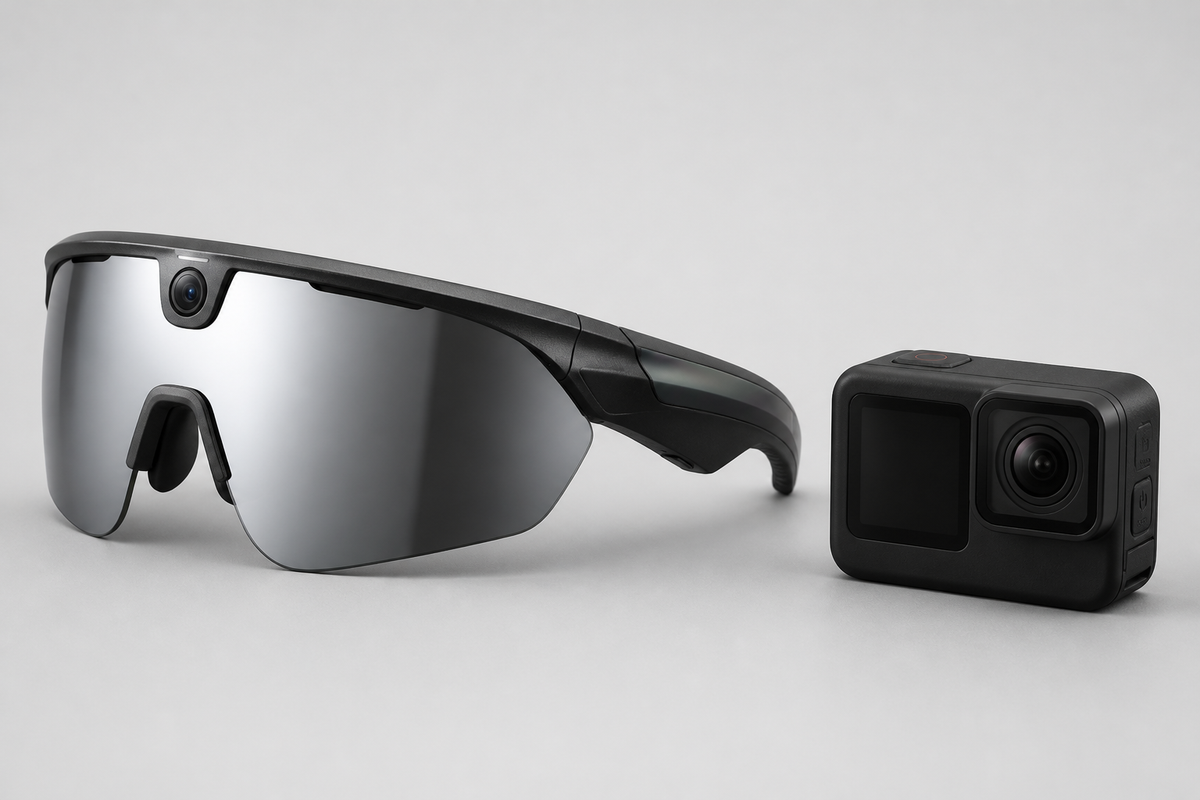
| Camera glasses | Eye level, follows your natural gaze | Lens and fit quality matter as much as the camera |
The key difference is not image quality. It is whether the camera follows your attention. Handlebars and chest mounts record where the bike points. Helmet mounts and glasses record where you look. On a twisting road, that is frequently not the same direction.
What actually decides footage quality
Resolution is the headline number and one of the least important factors in practice. The order that matters is roughly this:
1. Stability. An unstable frame is unwatchable at any resolution. 2. Field of view. Too narrow and a road looks like a corridor; too wide and everything shrinks. 3. Light handling. How the camera copes with contrast between sky and road. 4. Position. Where the camera sits relative to your eyeline. 5. Resolution and frame rate. Important once the first four are right.
This is why handlebar footage often disappoints despite a good sensor. The camera is rigidly attached to a vibrating frame at a low angle, which is the worst combination for stability and perspective.

Worth knowing:: vibration is the specific problem a mount cannot solve. Digital stabilisation helps, but a camera attached to the frame still receives the harshest input. A camera worn on the head receives motion the body has already absorbed.
Why wearables change the ride
Camera glasses are not simply a smaller action camera. Moving the camera onto the face changes the practical workflow in three ways.
- No setup. There is nothing to mount, charge separately, or remember to bring. You are already wearing the glasses.
- No aiming. The footage follows your gaze, which is usually the shot you wanted.
- No interruption. You do not stop to start recording, which means the moment worth capturing is not lost to the act of preparing for it.
The cost is that glasses must also work as glasses. Fit, lens quality, and comfort over a long ride matter as much as the camera, and those are the things worth checking carefully before buying. A frame that shifts on rough road or becomes uncomfortable after an hour will not be rescued by its sensor.

Match the camera to the ride
The right answer depends on what you ride.
- Road and fast descents: stability and a wide view matter most; low-mounted cameras struggle
- Commuting: discretion and simplicity; a camera you forget you are wearing
- Gravel: constant motion; stabilisation is the single priority
- Touring: battery and storage dominate; you cannot charge mid-ride
- Group rides: eye-level footage reads as a rider's view, which suits the format
The practical setup questions
Before choosing, answer four questions honestly.
1. How long do you actually record? Short clips need far less power than continuous capture. 2. Do you want to look at the footage later, or share it? Sharing needs an editing path, not just storage. 3. Will you wear it when you are not recording? This is the strongest argument for camera glasses. 4. Do you need prescription lenses? If so, the lens system becomes part of the buying decision.
On power, the honest position is that continuous recording is limited by battery, and short-clip usage is far less demanding. Rover records up to about one hour of continuous video from the glasses, and with its own power bank that extends to roughly five hours of recording, subject to settings and conditions. If your real use is three twenty-second clips per ride, none of this is a constraint.
Compatibility note:: high-frame-rate video features on BleeqUp Ranger are currently available on iPhone 14 or later running iOS 18.7.5 or later, with Android support under development. Feature availability varies by device, so check the current product page before ordering.
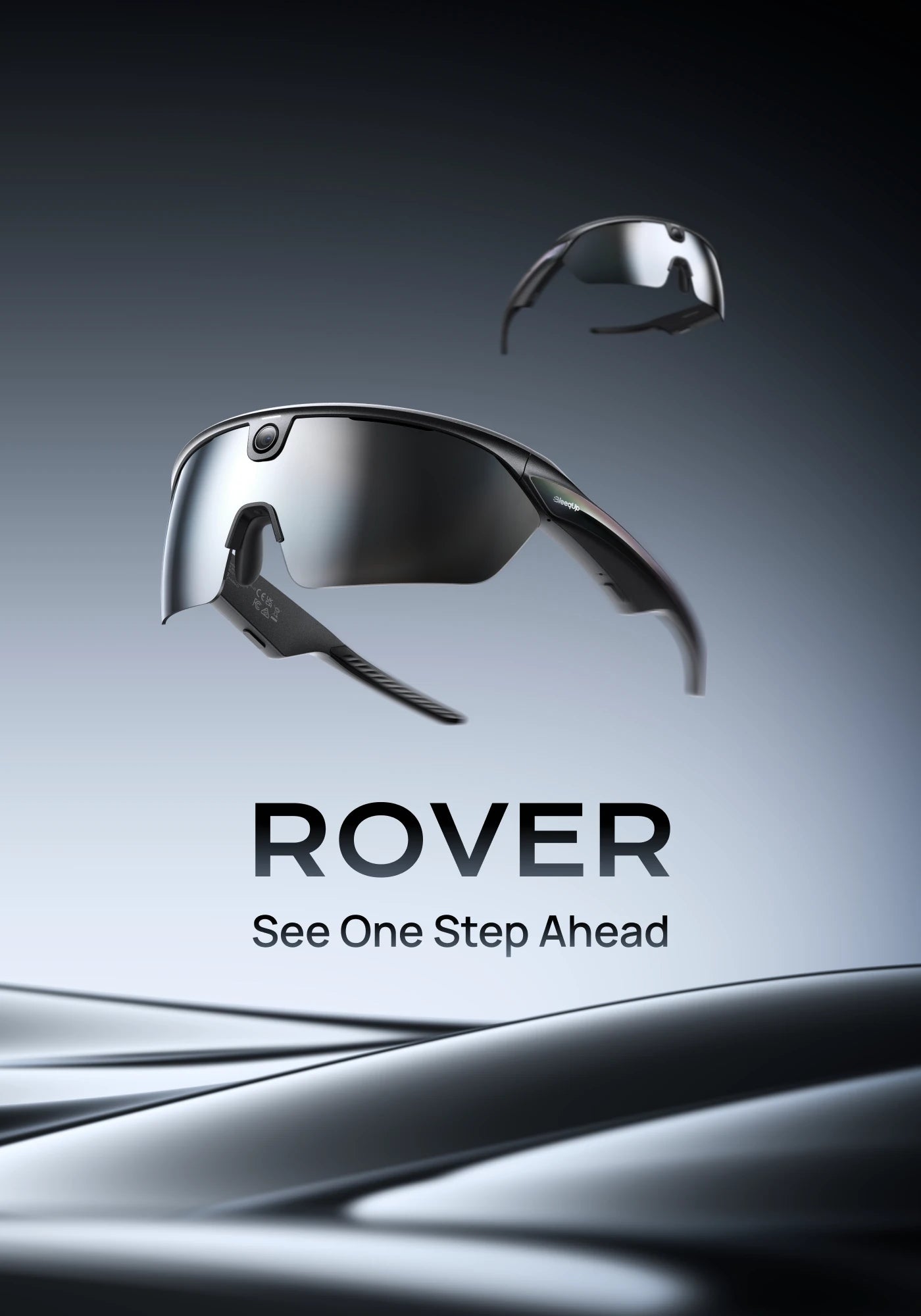
If you want to see the wearable format in detail, BleeqUp Rover combines the camera, ZEISS lens options and open-ear audio in one pair of sport glasses.
What to do next
If you are weighing a mounted camera against a wearable one, the mount versus camera glasses comparison goes through the practical differences in detail. The camera glasses versus action camera piece covers the format question more broadly, and the Ranger review is a concrete look at what a wearable cycling camera includes.
FAQ
What is the best camera position for cycling videos?
It depends on what you want to record. Handlebar mounts give a stable forward view of the road, helmet and camera glasses give an eye-level view that follows where you look. If you want footage that reflects the ride as you experienced it, eye level is usually closer.
Are action cameras or camera glasses better for cycling?
Action cameras offer more mounting options and larger sensors, while camera glasses are simpler in practice because there is nothing to mount or aim. The deciding factor is usually whether you value flexibility or convenience more.
How do I stop cycling footage from being shaky?
Choose smoother surfaces where possible, use a camera with electronic stabilisation, and avoid rigid frame mounting, which receives the harshest vibration. A camera worn on the head benefits from the body's own natural absorption.
What resolution do I need for cycling video?
Fewer than the marketing suggests. Stability, field of view, and light handling matter more to whether footage is watchable. A 3K60 mode is a reasonable practical target for motion and detail, subject to device compatibility.
Can I use camera glasses with prescription lenses?
Some models support it. BleeqUp Ranger includes an RX lens insert, and prescription lenses can be fitted separately, so the exact process is worth confirming with an optician before ordering.