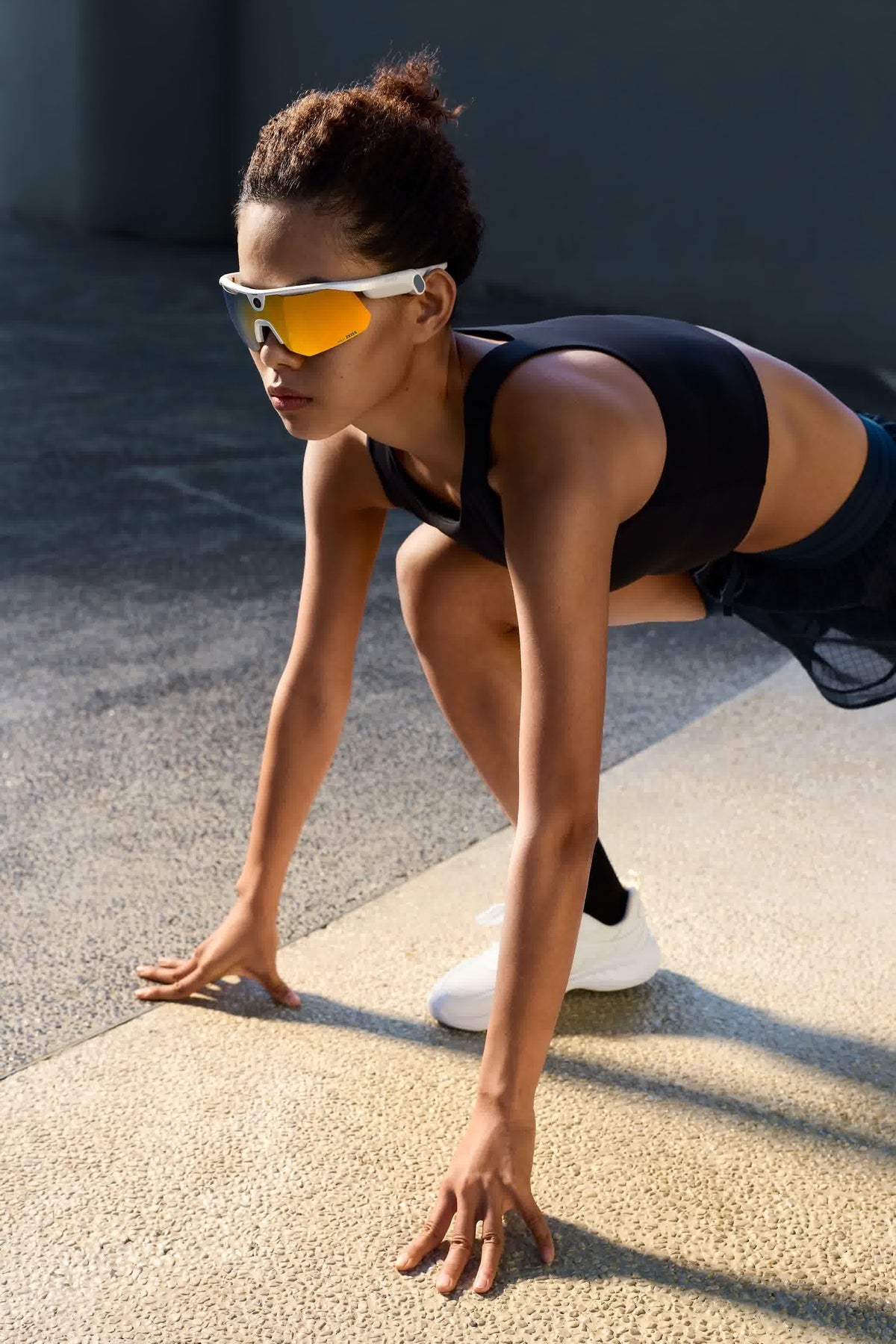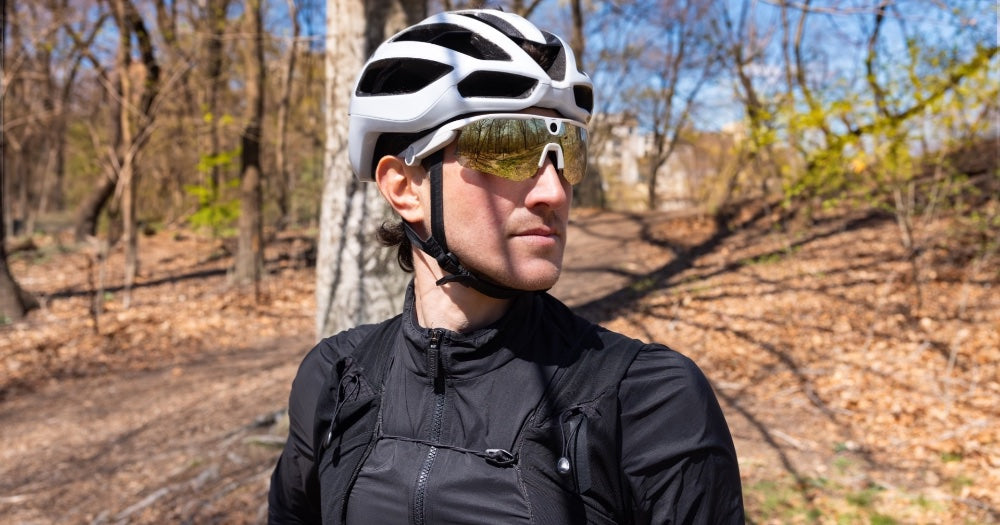
Most "smart glasses with a camera" you see advertised are lifestyle gadgets — thin frames built around an AI voice assistant and quick snapshots. BleeqUp Ranger is not that. It is a sports camera you wear, built to record 3K 60fps first-person video while you ride, run, or hike, with open-ear audio so you can still hear traffic.
That single distinction is the whole buying decision. If you want an AI assistant on your face, buy a lifestyle pair. If you want a hands-free POV camera that survives sweat, wind, and a two-hour ride, you want the sports kind. This guide covers the second one.
What "smart glasses with a camera" actually means
The term is loose. It covers anything from a pair of glasses with a tiny photo sensor bolted on, to a full sports camera with open-ear speakers and wind-noise mics. Before you compare, pin down three things:
- What the camera records. A 3K 60fps sensor with stabilization is a different product from a 720p snapshot sensor. Check resolution and frame rate, not just "has a camera." - How you hear it. Some play audio into your ear canal, which blocks traffic noise. Others use open-ear speakers that leave your ears open. For any sport on a road or trail, open-ear is the safety-relevant choice. - What it weighs and how it fits. A sports pair should stay put through head movement, not sit on your nose like reading glasses.
Two kinds: lifestyle AI glasses vs sports camera glasses
The category splits cleanly in two, and the marketing rarely admits it.
Lifestyle AI glasses put the assistant first. They record short clips for social, answer questions, and look like normal eyewear. The trade-off is recording quality and battery — they are not built for an hour of continuous video, and the fit is not designed for a helmet or sweat.
Sports camera glasses put the camera first. They record long first-person clips with stabilization, run open-ear audio for awareness, and use a wraparound sports frame. The trade-off is they look like sports eyewear, not a fashion statement.
For recording a ride, a run, or a hike, the sports category wins on the things that matter: footage length, stability, and safety. If you mainly want a camera that doubles as an AI chat device, the lifestyle category is the better match.
What to look for
Here are the five specs that actually change how a sports camera glass performs, not the marketing bullet points.
| Spec | Why it matters | Ranger reference | |---|---|---| | Resolution / frame rate | Decides how usable the footage is after the fact | 3K 60fps, 16MP photo, 120° field of view, electronic stabilization | | Weight & frame | Decides whether you forget you are wearing it | 49 g on a TR90 sports frame | | Audio | Decides whether you stay aware of traffic | Four open-ear speakers, five mics with wind-noise reduction to about 40 km/h | | Battery | Decides whether it lasts your session | 260 mAh for about an hour; Power Plus adds up to about five hours | | Water / dust | Decides what weather it survives | IP54: sweat and light rain, not submersible |
One honest note on water: IP54 is not waterproof. It handles sweat and a light drizzle, but do not swim in it or leave it in heavy rain. If a listing says "waterproof" without a rating, treat that as a red flag.
Price and optics are the last two levers. The Ranger starts at $379 for the standard lens and $439 for the Carl Zeiss co-branded version — the same camera and frame either way, with the upgrade sitting in the lens. The frame's design also won a Red Dot award, which is a useful signal that the ergonomics were judged rather than just claimed.
Why POV and open-ear audio matter for sports
A chest or helmet mount holds an action camera at a fixed angle. Glasses record what you actually look at — glance down at the trail, check a junction, look over your shoulder, and the camera follows. That is the POV difference, and it is why riders and runners pick glasses over a mounted camera for everyday footage.
Open-ear audio is the underrated half. A closed earbud blocks the sound of a car or a cyclist behind you. An open-ear speaker keeps that channel open while still playing navigation prompts, calls, or music. For anything on a road, that is a safety feature more than a convenience one.
The app side matters too. After a ride, the point is not to sort through an hour of raw footage by hand — the AI editing should pull the interesting moments for you, and the glasses should sync the session to the fitness apps you already use.
Prescription and fit
If you wear correction, check for an RX insert rather than ground-in prescription lenses. An insert sits behind the main lens, swaps out when you change tint or hand the glasses to someone else, and costs less to replace when your prescription changes. The Ranger ships with the insert included; you only pay for the fitting.
One compatibility note worth knowing before you buy: the higher frame-rate modes (1080p60, 3K30, 3K60) currently need an iPhone 14 or later running iOS 18.7.5 or newer, with Android support targeted for mid-2026. That decides how smooth your footage can be on the phone you already own.

FAQ
What is the difference between smart glasses and camera glasses?
Camera glasses are built around recording first-person video. Smart glasses is a broader category that can include audio, a voice assistant, notifications, or a display — with or without a camera. A sports camera glass is a specific, camera-first subset.
Can smart glasses with a camera record for a full ride?
Depends on the battery. A dedicated sports pair runs about an hour on its own cell; an add-on battery pack can stretch that to roughly five hours of continuous recording. Lifestyle pairs are usually shorter, because they are not designed for long captures.
Do smart glasses with a camera work with prescription lenses?
Yes, if the frame uses an RX insert. Look for a removable insert rather than lenses ground directly into the frame — it is cheaper to update when your prescription changes. The insert does not affect the camera, audio, or battery.
Are camera glasses waterproof?
Most are water-resistant, not waterproof. The Ranger is rated IP54, which covers sweat and light rain. That is not a rating for submerging them.
Why not just use an action camera on a mount?
An action camera works well for planned, multi-angle shooting. Glasses win for natural first-person footage with no mount to adjust, and for keeping your hands free. They record where you look, which a fixed mount cannot.
Shop the BleeqUp Ranger AI Sports Camera Glasses and compare it with our camera glasses buying guide and the camera glasses vs smart glasses breakdown. New to the category? Start with what camera glasses are, or see prescription camera glasses if you wear correction.