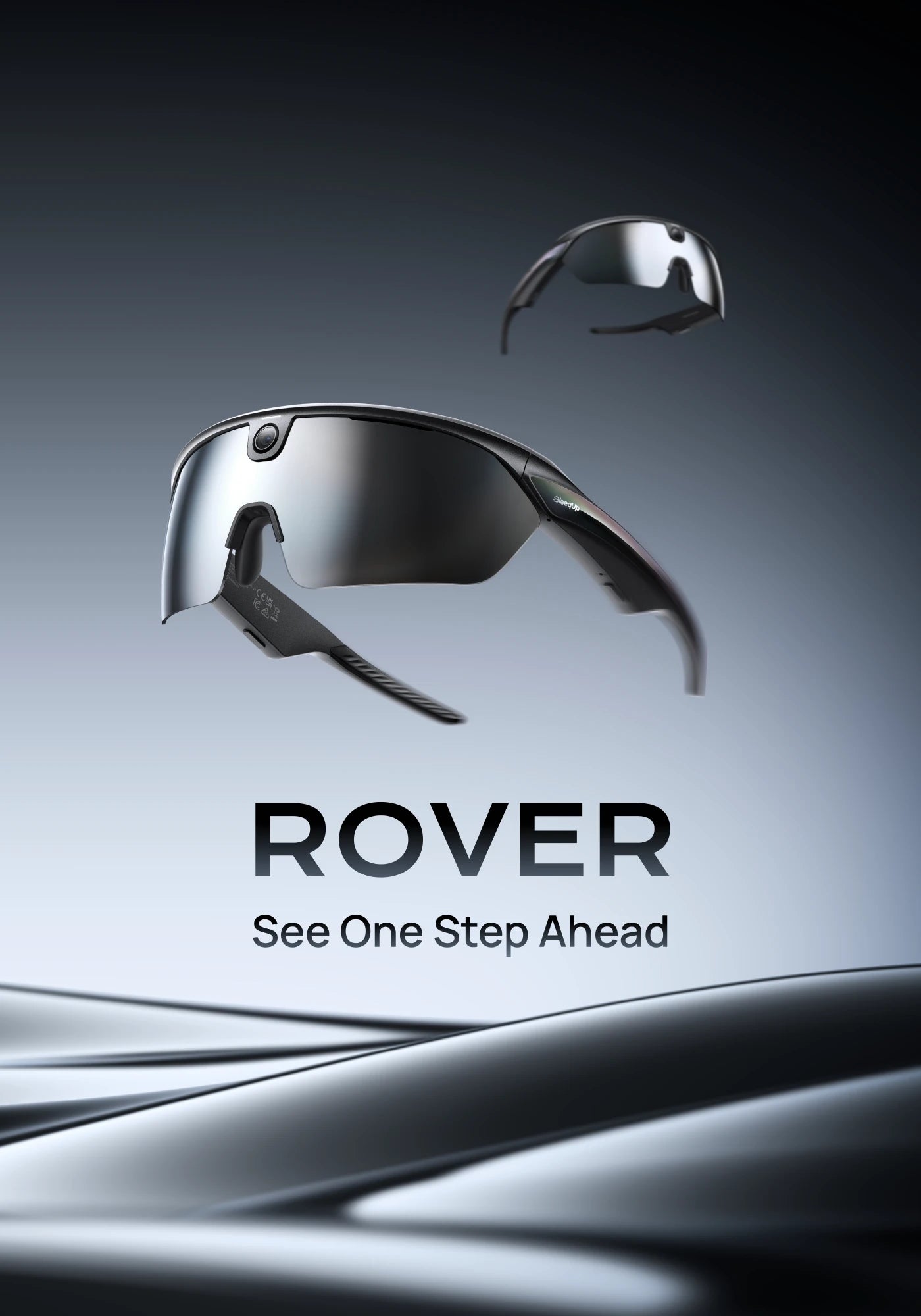
Guides & Tips
The best AI sports glasses for cycling should disappear into the ride: clear vision, steady comfort, hands-free recording, and audio you can hear without closing yourself off from the road.
Choosing AI sports glasses is less about collecting the longest feature list and more about matching the glasses to the way you actually ride. A quick commute, a long training loop, and a weekend adventure all place different demands on lenses, fit, recording, and battery life.

Start with the ride you want to remember
Before looking at specifications, describe your normal ride. Do you leave before sunrise, move between shade and bright sun, or spend several hours on open roads? Do you want short first-person clips, a continuous record of a route, or simply a lightweight pair of sports glasses that can capture a moment when both hands are busy?
- Short daily rides: prioritize a secure fit, quick controls, and lenses that work across changing light.
- Long training rides: look closely at comfort, recording time, charging, and how easily you can carry extra power.
- Fast group rides: prioritize stable vision, open-ear awareness, and controls that do not require you to take your hands off the bars.
- Mixed outdoor use: choose a frame and lens setup that can move from cycling to running, walking, or travel.
1. Choose lenses for the light you actually ride in
Lenses are the first part of the experience because they affect every minute on the road. Start by considering the light you see most often rather than choosing a color only because it looks good in a product photo.
Clear or lighter lenses can be useful for overcast mornings and lower-light routes. Darker or tinted options can make bright open roads more comfortable. If your route moves between shade and sun, a photochromic option can help reduce the need to change lenses during the ride. Riders who need prescription correction should look for an RX insert that an optician can make to their prescription while the sports glasses remain the recording and audio platform.

For a deeper look at premium optical options, see the BleeqUp Ranger lens guide. If prescription vision is part of your decision, the RX insert guide explains how the insert works with Ranger.
2. Fit matters more than a perfect product photo
Sports glasses need to stay aligned when you look over your shoulder, stand on the pedals, or ride across rough pavement. A good fit keeps the lens in the right place, reduces pressure behind the ears, and keeps the camera pointed where your eyes are pointing.
Check three things before ordering: the bridge should sit securely without pinching, the temples should stay stable without creating pressure, and the lens should cover your normal field of view without blocking useful peripheral awareness. A frame that feels comfortable for five minutes may feel very different after two hours, so weight and balance matter. Ranger is designed around a lightweight 49 g form factor, but the most important test is still how the frame sits on your face.

3. Look for recording that follows your point of view
With cycling glasses that include a camera, the useful question is not only resolution. It is whether the recording feels connected to the ride. An eye-level camera can capture what you are looking at without adding a separate device to the handlebars or helmet, and one-touch controls make it easier to record a short moment without breaking your rhythm.
Look for a clear recording indicator, physical controls you can find by touch, and stabilization that keeps ordinary road movement watchable. Ranger supports up to 3K 60 fps video in compatible configurations. The exact recording time depends on the selected mode and conditions, so plan around the kind of clips you actually want to keep.
4. Keep your ears open while audio stays close
Audio should add information without making the road feel distant. Open-ear audio lets you listen to navigation prompts, calls, or music while remaining aware of traffic, riding partners, and the changing sound of the environment. Volume should be comfortable rather than overpowering, especially on a group ride or a busy road.
When you try on AI sports glasses, check that the speakers sit comfortably near your ears and that the controls are easy to reach. Wind-noise performance also matters: the right setup keeps voices and prompts understandable without forcing you to raise the volume too high.

Our open-ear audio guide covers wind noise, ride alerts, and safe listening habits in more detail.
5. Plan for charging and the length of your ride
Recording and audio use power differently. If you mostly capture short clips, a normal pre-ride charge may be enough. If you record longer sections, plan how you will recharge and where you will store the glasses between rides. The practical questions are simple: how long do you want to record, can you start a charge before leaving, and do you need a compact power accessory for a longer day?
Keep the charging contacts clean, store the glasses in a protective case, and check the product page for the current recording and audio limits of the configuration you select. A realistic plan is more useful than assuming a single battery number will fit every ride.
A simple checklist before you buy
| What to check | Why it matters |
|---|---|
| Lens and prescription options | Clear vision is the foundation of a comfortable ride. |
| Frame weight and bridge fit | A stable frame keeps the camera aligned and reduces pressure over time. |
| Physical recording controls | You should be able to start a clip without losing your riding position. |
| Open-ear audio placement | Comfortable audio helps you stay aware of the road and riding group. |
| Charging and storage plan | Your setup should match the length and frequency of your rides. |
| Privacy and local recording rules | Be considerate of people around you and follow local requirements. |
Make the setup feel natural
The best AI sports glasses are the ones you can wear, hear through, and control without interrupting the ride. Start with the lens and fit, then confirm that the camera, open-ear audio, and charging plan match your normal routes. You can read the BleeqUp Ranger review, browse the cycling glasses buying guide, and use the connected workflow guide for setup details. When you are ready to choose a configuration, explore BleeqUp Ranger AI Sports Glasses.
FAQ
Can I use an RX prescription with AI sports glasses?
Yes. Ranger supports a prescription insert that can be made by an optician. Confirm the insert option and measurements before ordering.
Are AI sports glasses only for cycling?
No. The same combination of eye-level recording, open-ear audio, and sports eyewear can also support running, hiking, walking, and travel.
What should I test first?
Test fit and vision first, then confirm that the recording controls and audio placement feel natural. Those choices affect every ride more than a long list of optional features.
Find your ride-ready setup
Explore the Ranger frame, lens options, and prescription insert for a hands-free way to record the moments you see on the road.