
On the course
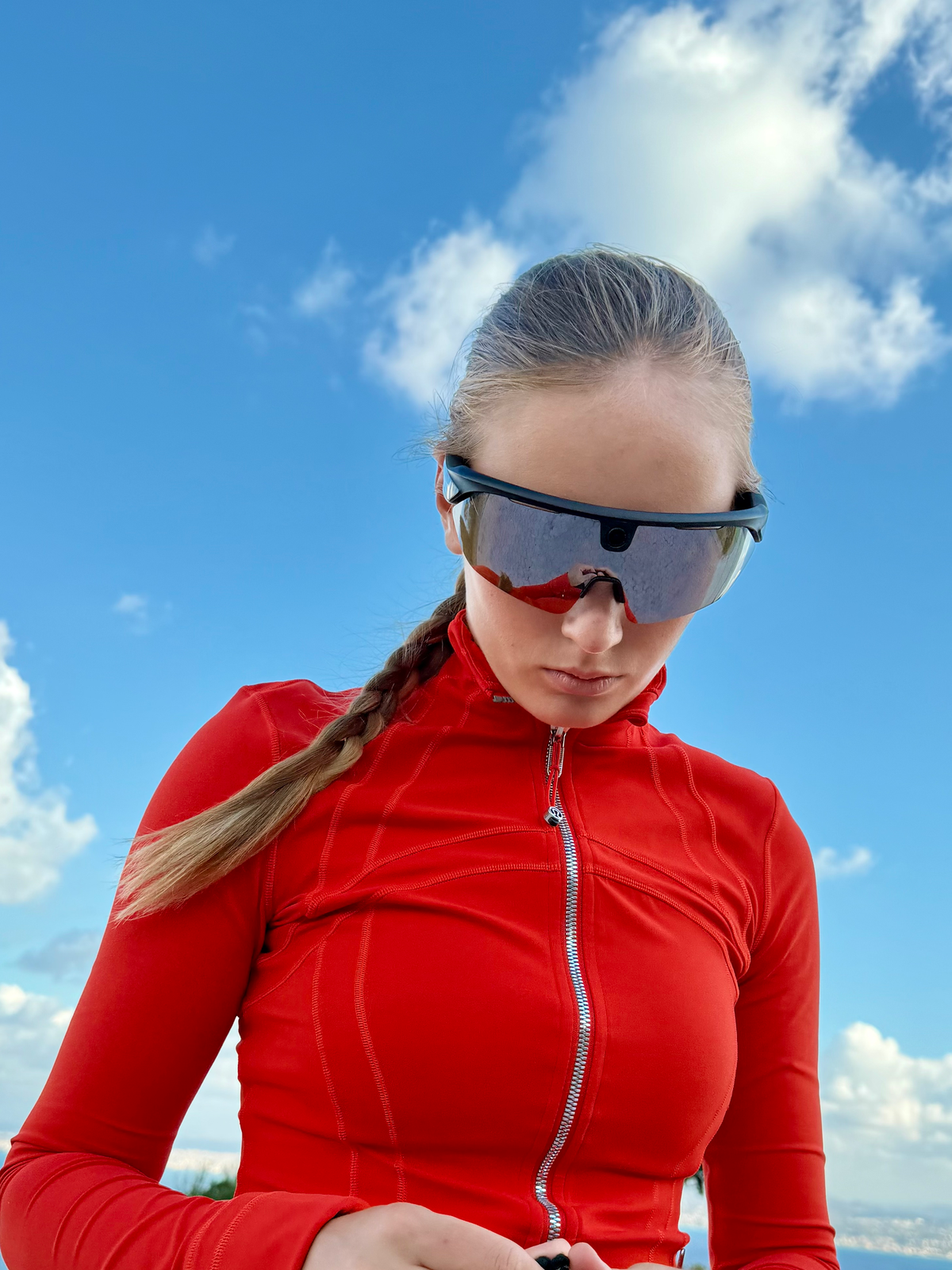
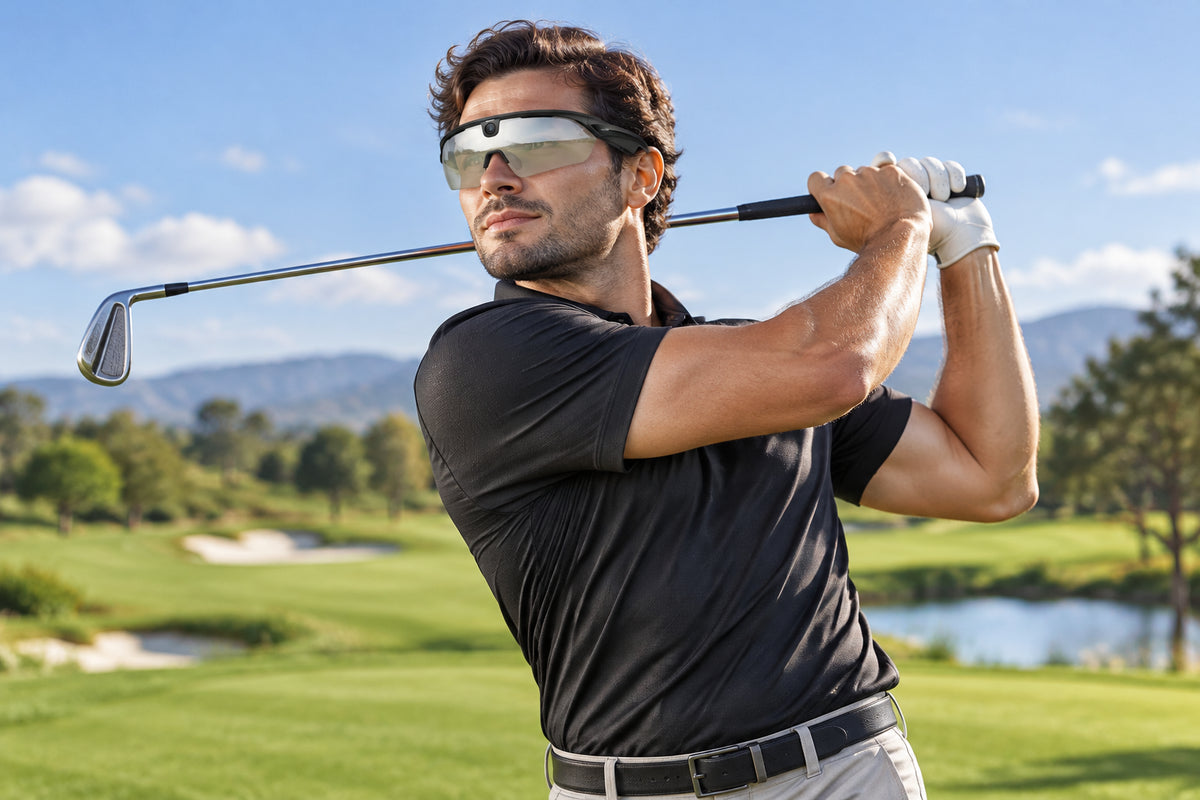
A golf swing camera has one problem that better hardware cannot solve: setting it up takes longer than the shot. Glasses move the camera onto the player, which changes what the footage is for — and changes it for the better in three specific ways.
Golf has been recording swings since before cameras were cheap to buy, and the standard arrangement has not changed much: a phone on a tripod, or a phone wedged against a bag, placed down the line or face-on, set up before every shot and taken down after.
That arrangement exists because the camera has to be somewhere, and somewhere is not on the golfer. The cost is time, and the cost of the time is that you film less than you meant to. Camera glasses remove the setup entirely, at the price of changing the angle.

What the tripod angle is actually for
Be fair to the tripod first, because it earns its place.
A down-the-line camera behind the player shows the swing plane, the club path and the body rotation relative to a fixed line. A face-on camera shows weight shift, head movement and the relationship between the arms and the torso. Both angles work because they are fixed relative to the ground, which is what makes comparison between swings meaningful.
That is the teaching value, and no camera on the body reproduces it. If the purpose of the footage is swing analysis, a fixed camera is correct, and it should stay fixed across a session.
What eye-level footage adds
Three things, and they are not swing-analysis things.
The shot as you saw it. Where the ball actually went, what the lie looked like from address, where the hazard sits in your field of view, how the fairway doglegs. A camera on your face answers the question "what was I looking at", which is the question you ask after a bad round, not the one a swing coach asks.
Zero setup. This is the whole commercial argument. You put the glasses on at the first tee and record when something is worth recording. No tripod, no alignment, no walking back to fetch the phone. Over eighteen holes, that is the difference between a couple of clips and a full record of the round.
Audio, which matters more in golf than people expect. Open-ear directional audio lets you hear your playing partner's comment, the strike, the reaction — without blocking the ambient sound you need to hear "fore" from the next fairway. That is a genuine advantage of this form factor on a golf course, and it is not something a tripod camera offers at all.
The honest limitation: the ball is a small white object moving at speed, and it will be a small white object moving at speed in the footage too. Eye-level video does not turn a phone-class sensor into a high-speed swing analyser. If you want frame-by-frame impact analysis, you need a high-frame-rate camera pointed at the ball, not a camera on your nose.
Head angle is the problem, and the tilt is the answer
Address posture is not neutral. You bend at the hips, you look down at the ball, and your head follows. A camera fixed to the frame in the level position therefore films the ground in front of your shoes during the address and the fairway during the follow-through.
That is exactly the problem the three-position tilt solves, and it makes this one of the few sports where the tilt feature is worth using between shots rather than once a season.
- Address and the shot itself: the level position is usually right, because your head is already pitched down and the camera comes with it.
- Watching the ball flight after impact: a slight positive tilt — plus fifteen degrees — follows the ball up. This is where you capture the shot the way you experienced it.
- Putting and short game: level, with the camera roughly along your line of sight to the hole.
The switch is mechanical with a positive detent, which matters because you are adjusting it with a gloved hand, standing on grass, sometimes in wind. A motorised version would be worse at this specific job.

Recording a round without ruining it
A few practical notes that come from how the hardware actually behaves rather than from a best-practice list.
You get about an hour of continuous recording. A round is four hours. You are not recording the round; you are recording selected holes, selected shots, or a period of practice. That constraint is useful — it forces the selection that makes the footage watchable.
3K60 records one minute at a time. If you want an uninterrupted clip of a long conversation or a walk between shots, 1080p30 has no clip limit. For a swing, one minute is more than enough.
Loop recording is the mode that suits golf. Recording continuously and letting the camera overwrite older footage means you never have to decide to press record, and when something happens you keep it. Check how your device marks and preserves the segment you want.
Golf is a quiet sport and a camera is a social object. Recording a playing partner without asking is the same category of mistake as taking their ball. Most courses have no rule against it and most players will say yes if asked.
What to wear it with, and what to watch for
A cap interacts with the frame more than anything else in golf. The temple arms have to pass under or outside the cap band depending on how you wear it, and the ear hook has to clear it. Try the combination before the round, not on the first tee.
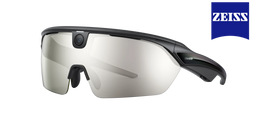
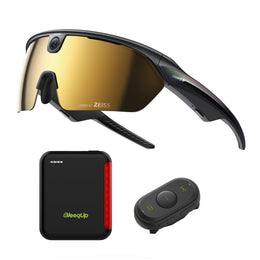
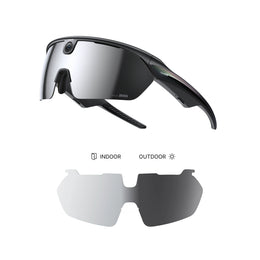
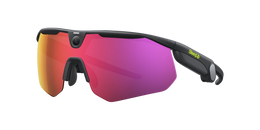
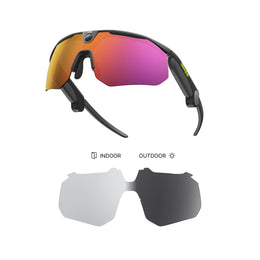
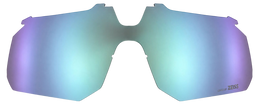
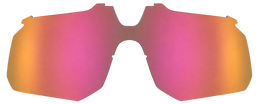
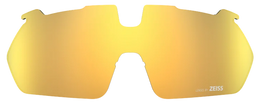
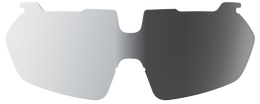
The lens matters too, and golf is one of the cases where a photochromic shield earns its price. Morning rounds move from flat grey light to bright sun within ninety minutes, and a fixed dark tint is wrong at one end of that and a clear lens is wrong at the other. A shield that darkens with the light removes the decision.
Glare is the other thing. A polarised lens cuts glare off water and wet tarmac; on a golf course it can also flatten the contrast you need to read the green. If you wear polarised lenses for everything else, this is the one activity where you might prefer not to.

When a tripod is still the right answer
Three cases, all legitimate.
Swing instruction. A fixed down-the-line camera for twenty consecutive swings, all from the same position, is a better teaching tool than twenty clips from a moving head.
Club fitting and launch-monitor work. Those setups use fixed cameras and radar, and the data is not coming from your glasses.
Filming someone else. If the footage is of a playing partner's swing, the camera needs to point at them, and that means a fixed camera.
Camera glasses are for your own experience of the round, which is a different product from analysis. Both are worth having, and they do not overlap much.
If you are comparing camera eyewear for the course against other sports, the sports glasses with camera buying guide covers the category, camera glasses for outdoor sports covers the multi-sport case, and the Rover review is where the compromises are listed honestly. The product page has the full specification.
FAQ
Can golf camera glasses replace a swing analyser?
No. A swing analyser needs a fixed camera, ideally a high-frame-rate one, positioned the same way every time so swings can be compared. Camera glasses record your experience of the round from your own eye line, which is a different job and useful for different reasons.
How do you record a golf swing hands-free?
Wear the glasses, set the camera tilt to match your posture, and record. On hardware with a tiltable brow module, set it to level for the address and shot, or to a positive angle if you want to follow the ball flight. There is no tripod to set up or aim.
Will the camera see the ball?
It sees it leave the face, and on a good strike it can follow the flight for a stretch. It will not produce frame-by-frame impact analysis — a small ball moving fast is beyond what a phone-class sensor records at sixty frames per second. Be sceptical of any product claiming detailed impact capture from a worn camera.
Can you wear them while putting?
Yes, and eye-level footage is genuinely useful on the greens because it shows the line you saw and the pace you judged. Set the tilt to level and it records roughly along your line of sight to the hole.
Do they work with a golf cap?
Yes, but check the fit. The temple arms and the ear hook have to sit outside the cap's band rather than under it, or the frame tilts on your face. Try the combination before a round rather than discovering the problem on the first tee.
How long can they record during a round?
About an hour of continuous recording per charge. A round takes three to four hours, so plan on recording selected shots or a stretch of practice rather than the whole round. At 1080p30 there is no clip limit; at 3K60 clips are one minute each.