Worksite
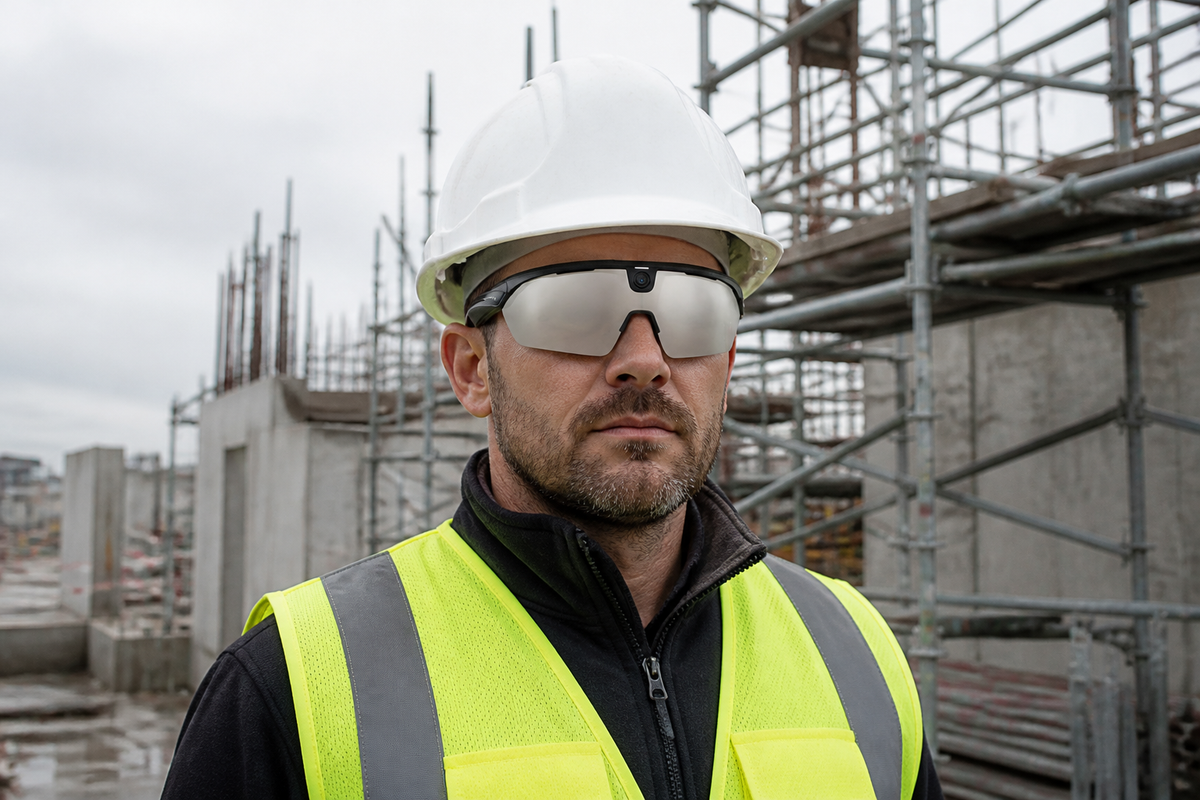
The phrase "safety glasses with a camera" describes two different products that share a look and nothing else: occupational eye protection, and camera glasses that happen to look like safety eyewear. Knowing which one is on your face is a safety question, not a marketing one.
A worker searches for safety glasses with a camera and finds two categories of result, and the search engines do not distinguish between them. One is occupational eye protection that happens to have a camera. The other is camera glasses that look the part. Wearing the wrong one on the wrong task is the kind of mistake that only reveals itself in an incident report.
So start with the standards, because everything else follows from them.
Z80.3 and Z87.1 are not the same conversation
ANSI Z80.3 is the standard for non-prescription sunglasses and fashion eyewear. It includes requirements for optical quality, UV transmission and impact resistance — the kind of basic impact resistance you want in eyewear you wear outdoors.
ANSI Z87.1 is the occupational eye and face protection standard. It is a different document with a different purpose: it covers high-velocity impact, chemical splash, dust, molten metal, welding radiation and more, and it requires equipment to be marked and tested against those specific hazards.
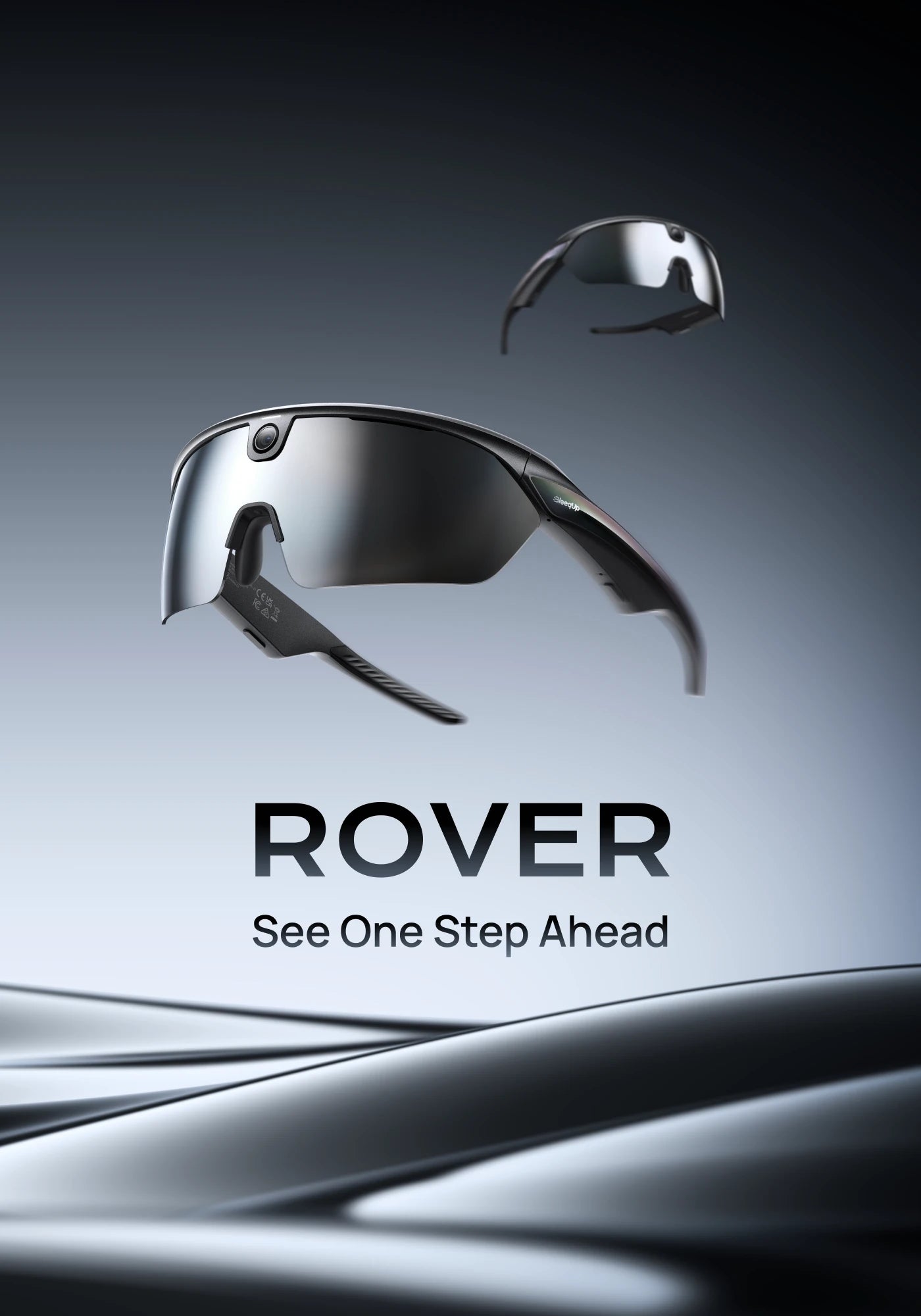
Rover's impact rating is ANSI Z80.3. It is not ANSI Z87.1. That is the single most important sentence on this page, and any article that blurs it — including this one if you skim — is doing the reader harm.
The practical consequence is simple and absolute: on any task where your employer, your site induction or your risk assessment requires Z87.1 eye protection, wear Z87.1 eye protection. Camera glasses are not an alternative, they are a different object with a different certification for a different purpose.
What camera glasses are genuinely good for on a site
None of that makes them useless. It makes them *documentation tools* rather than protection, and there is real value in that role.
Walkthroughs and progress records. A site walk is a sequence of decisions made on the spot — this needs moving, that is in the way, this is finished, that is not. Recording it at eye level captures what you were looking at when you made the call, which is far more useful than a phone photo taken from a convenient angle after the fact.
Inspection and snagging. In a plant room, a service riser or a scaffold, the thing you need to remember is often above your head or behind a panel. Eye-level footage with a 120° field of view catches the surroundings around the detail you were looking at, which is usually what you need three days later when you are writing the report.
Method statements and toolbox talks. Filming a technique from the operative's point of view is a different teaching artefact from a camera on a tripod. It shows the hands, the eye line and the obstruction in the same frame.
Remote support. Someone at a desk watching what you see, while your hands are both busy, is a genuinely better arrangement than holding a phone at arm's length.
In all four of those cases the worker is *already* wearing the appropriate eye protection for the task, and the camera glasses are for the parts of the day where no hazard is present. That ordering matters: PPE first, documentation second, and never the other way round.
The tasks where the answer is no
Be concrete about this, because "use appropriate PPE" is the kind of sentence nobody reads.
If the task involves any of the following, camera glasses are the wrong eyewear and should not be the only thing between your eyes and the hazard:
- Grinding, cutting or abrasive wheels. High-velocity particles. Z87.1 equipment is required, usually with a face shield over it.
- Chemical handling, decanting or splash risk. Z87.1 covers splash resistance; Z80.3 does not test for it.
- Welding, brazing or any hot-work operation. Radiation protection is a Z87.1 requirement and has no Z80.3 equivalent.
- Dust-generating work in a confined space. Sealed or close-fitting protection matters; a vented frame is not that.
- Any task where your risk assessment names a specific eye-protection standard.
There is also a less obvious one: a camera on your face changes where you look. People being recorded tend to look at the camera rather than the work, which is exactly wrong on a live site. If you are filming, you should not also be the person doing the hazardous task.

What the hardware adds, and what it costs
Setting the standards aside, the practical properties that matter on a site:
- IP65 — dust-tight and protected against low-pressure water jets. That covers site dust, drizzle and spray, and it is a fair rating for a working environment.
- 53g and a TR90 frame — light enough to wear for a shift, robust enough for ordinary knocks.
- About one hour of continuous recording — which is the number that governs how you use it. A site walk is 20 to 40 minutes; a shift is not.
- 32GB or 64GB storage, roughly four and a half to five and a half hours of 1080p30 per 32GB.

Two costs worth naming. First, a camera on a worksite raises consent and data-protection questions that a camera on a bike does not: colleagues, subcontractors and members of the public may all be in frame, and many sites have explicit rules about recording. Second, a scratched front element degrades footage permanently, and site dust is abrasive. A case and a cleaning cloth are not optional accessories.
How to use this without getting it wrong
A short set of rules that survives contact with a real site:
1. Check the induction. If the site or employer prohibits recording, that settles it regardless of the hardware. 2. Wear certified PPE for the task, always. Camera glasses do not replace it, and on prohibited tasks you should not be wearing them at all. 3. Film the walkthrough, not the work. Two separate activities, two separate sets of eyewear. 4. Ask the people in frame. A worksite is not a public street, and colleagues have a reasonable expectation of not being recorded all day. 5. Label and store footage as site data, not as personal media. It usually contains more information about a site than a photograph does.
If you are comparing camera eyewear generally rather than specifically for worksites, sports glasses with a camera buying guide covers the category, and the BleeqUp Rover product page has the full specification including the IP65 rating and storage options.
FAQ
Are camera glasses the same as safety glasses?
No. Safety glasses are certified occupational eye protection, typically to ANSI Z87.1 or an equivalent standard. Camera glasses carry an everyday impact rating — ANSI Z80.3 on Rover — which is not an occupational protection standard and does not cover chemical splash, high-velocity impact or welding radiation.
Can I wear them instead of safety glasses on a site?
Only where the task does not require certified eye protection at all. On any task where Z87.1 is specified or required by your risk assessment, you must wear Z87.1 equipment. In practice that means camera glasses are for walkthroughs and documentation, not for the work itself.
What does Z80.3 actually certify?
It is the standard for non-prescription sunglasses and fashion eyewear, covering optical quality, UV transmission and basic impact resistance for ordinary wear. It is not a workplace protection standard and it is not tested against occupational hazards.
Are they safe in rain and dust?
IP65 covers dust ingress and low-pressure water jets from any angle, so ordinary site dust and rain are within rating. They are not rated for immersion, and a dusty lens wiped with a dry glove will scratch — carry a cloth.
Can I record on a construction site?
Only if the site permits it. Many sites and employers restrict or prohibit recording, and a worksite is not a public place in the way a street is. Check the induction, ask the people who will be in frame, and treat the footage as site data.