Snow
Skiing is the sport where the honest answer comes first — a pair of camera glasses is not a pair of ski goggles, and on a cold day the battery is the real limit. What works after you accept that is narrower and more useful than the marketing suggests.
Every winter, someone searches for "ski goggles with camera" and lands on a page about camera glasses. They are not the same product, and the difference is not cosmetic.
A goggle seals against the face with a foam gasket. That seal is what keeps spindrift out, keeps warm moist air in a closed chamber, and lets a double-lens or coated system resist fogging. A pair of glasses has no seal by design — it sits on the nose and temples and vents freely, which is exactly why it does not fog the way a goggle does and exactly why it cannot do a goggle's job in deep snow or at speed on a wet day.
So: what does a pair of camera glasses actually do on a mountain?
The three limits, before anything else
Cold cuts battery capacity. Lithium cells lose usable capacity as they get cold, and a 260mAh battery that gives about an hour of recording at room temperature will give noticeably less on a lift at -10°C. This is not a defect in one product; it is the same physics every compact battery-powered camera fights. Plan for shorter sessions than you would indoors, keep the glasses inside your jacket on the lift, and do not expect to record a whole ski day in one take.
IP65 is not waterproof in the sense skiers mean. Rover's rating means dust-tight and protected against low-pressure water jets from any angle. It does not mean submersible, and it does not mean "survives a fall into a snowbank and being sat on for an hour". Snow that melts in a warm car and refreezes inside a temple arm is the realistic failure mode, not a dunking. Dry them out properly at the end of the day.
There is no anti-fog chamber. A goggle manages moisture in a sealed volume. Glasses vent, so they fog less in the first place, but they also give you no margin when you stop moving and your face is wet. On a cold, damp day with a lot of standing around, a goggle is simply the better instrument.
If those three lines describe your ski day, camera glasses are the wrong tool and no amount of software changes that.

What the glasses are actually good at on snow
Accept the limits and a genuinely useful set of things remains.
Chairlift and ridge footage. The single best ski shot most people never get is the one from the lift: your own skis hanging over a groomed run, the corduroy pattern below, the treeline. It requires no hands, no setup and no stopping, and it is exactly what an eye-level camera is for.
Spring days and sunglasses weather. Late-season skiing, spring touring, bright days where goggles would be overkill for the descent but the light is still brutal — that is where a pair of UV400 glasses with a camera is not a compromise, it is just the right eyewear.
The walk-up and the après. Ski days are not only descents. The bootpack, the lift queue, the view from the top, the drive home — the moments people actually share. A camera that lives on your face records those without a decision.
Honest light handling. Rover records 3K60 HDR, and snow is the classic HDR problem: a white slope and a bright sky against a dark jacket. HDR is the single feature that most changes what snow footage looks like out of camera, and it is worth using deliberately rather than leaving on auto.

Fit: the helmet question, answered honestly
Two configurations work and one does not.
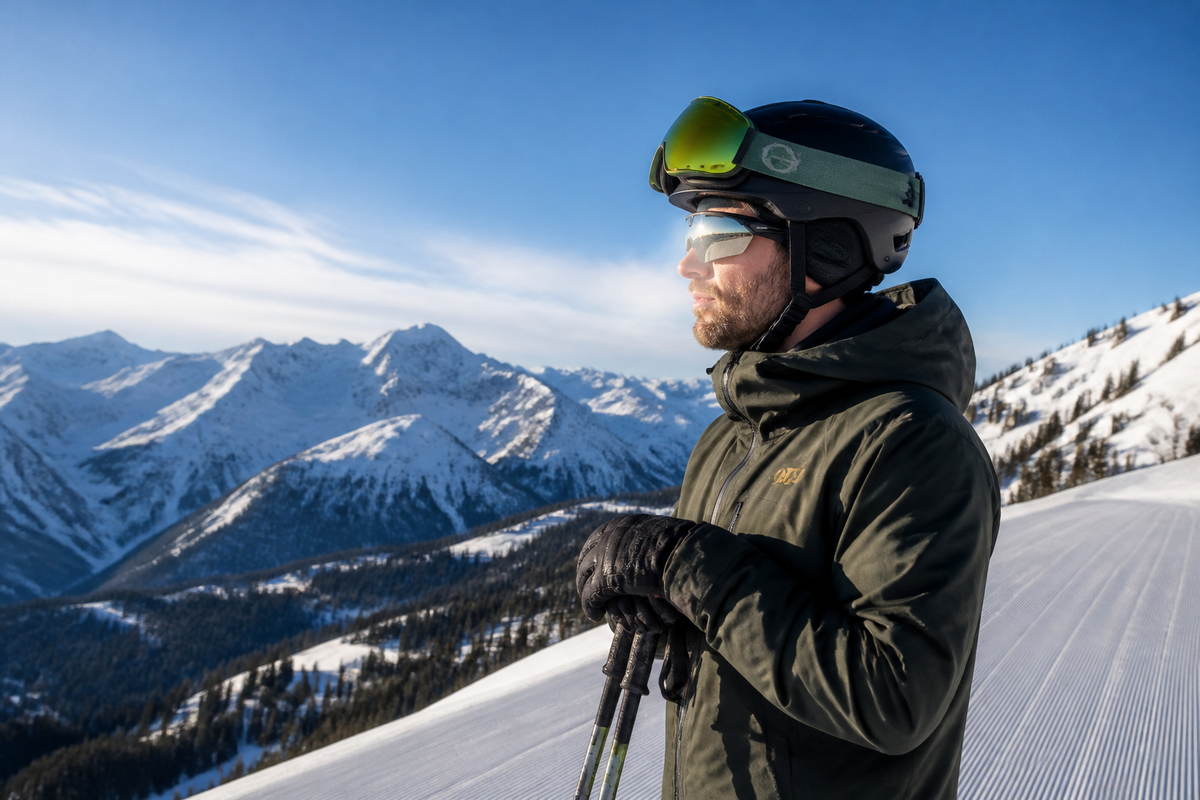
- Under a helmet, over the ears. This works if your helmet has enough clearance above the temple. It is the configuration in the photo at the top of this page, and it is the one to test before you buy.
- Without a helmet. Works fine, and is the more comfortable option on spring days.
- Over a balaclava or a thick beanie. Usually does not work. The temple arm has to sit against skin or a thin layer to stay put; adding fabric behind it pushes the frame forward and the camera off-axis.
The tilt adjustment matters more here than in most sports: the brow module moves between -10°, 0° and +15°. On a descent you are often looking down the fall line while your head is tilted relative to your body — the +15° position is what keeps the horizon where your eyes have it.
Recording modes, and why the one-minute caps matter on a lift
Rover's per-clip limits apply on snow exactly as they do anywhere else:
| Mode | Per-clip limit |
|---|---|
| 1080p30 | no time limit |
| 3K30 | 1, 3 or 5 minutes per clip (selectable) |
| 1080p60 | 1 minute (fixed) |
| 3K60 | 1 minute (fixed) |
A lift ride is two to eight minutes and a run is three to ten. If you are in 3K60 for the image quality, you are capturing one-minute fragments and you will be restarting mid-run. If you want the whole descent, 1080p30 has no cap — and on a bright snow day at 1080p30 you are not losing as much as the numbers suggest.
The practical answer most people land on: 3K30 set to a three-minute clip, restarted once per run. It fits the length of a run, it keeps the HDR benefit, and it does not need a hand on the button at the top of the lift.
Privacy on a mountain is not the same as privacy on a street
Ski resorts are crowded, and a camera on your face records everyone around you. Most resorts permit personal filming and prohibit commercial use without a permit; lessons, race training and children's ski schools have their own rules. If you are filming for anything other than your own memory, ask.
The same applies to the lift line. A helmet-mounted camera pointed forward is a familiar object; glasses that look like sunglasses are not, and people react differently once they realise they are being recorded.
How this compares with the other option
The other option most people consider is a helmet mount for an action camera. It produces a better image and a worse outcome for most skiers: a top-mounted camera is heavy, it changes your balance perception, and many helmets are not designed for it. A chin mount is better but needs a compatible full-face or a specific helmet.
For the broader comparison across sports — including where a mount wins — see camera glasses for outdoor sports. If your snow season is really a trail-running season, trail running and hiking camera glasses covers the warm-weather version of the same trade-offs.
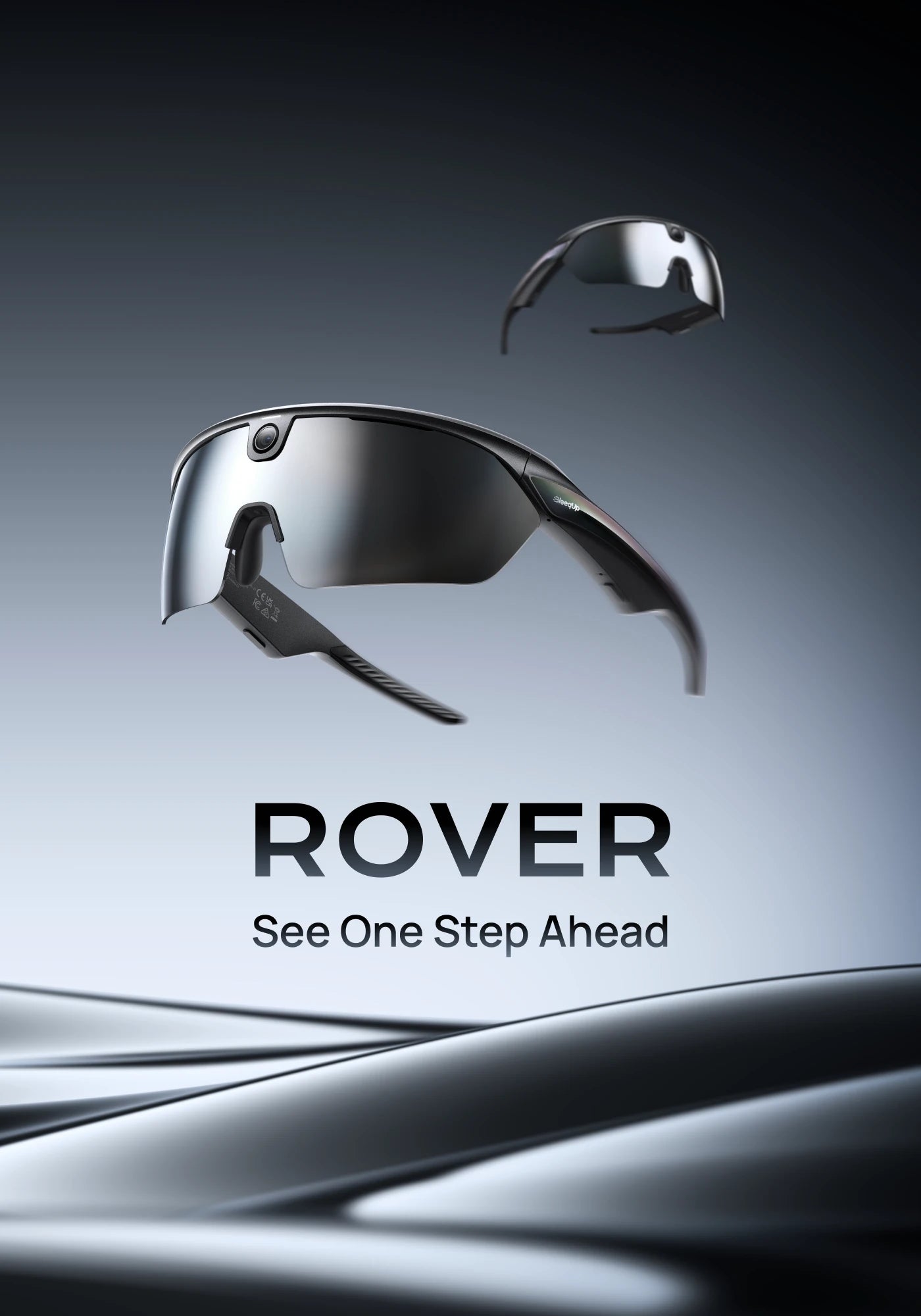
Full specifications for Rover, including the IP65 rating, the 3K60 HDR modes and both storage options, are on the BleeqUp Rover product page.
FAQ
Can I use camera glasses instead of ski goggles?
No, and you should not try. Goggles seal against the face, keep spindrift out and manage moisture in a closed chamber. Camera glasses vent freely. In deep snow, powder, or on a wet day at speed, a goggle is the correct eyewear and a pair of glasses is not a substitute.
Does the battery really drain faster in the cold?
Yes. Lithium cells deliver less usable capacity as temperature drops, so an hour of recording at room temperature becomes less than an hour on a cold lift. Keeping the glasses inside your jacket between runs, and recording in shorter bursts, is the practical mitigation.
Is IP65 enough for snow?
It is enough for snow that lands on the frame and is brushed off, and for spray from any angle. It is not enough for immersion, and it is not enough for snow that melts into a temple arm and refreezes. Dry them out at room temperature rather than leaving them in a cold car.
What recording mode should I use for a full run?
1080p30 has no per-clip time limit and will capture an entire descent in one file. If you want the 3K60 HDR look, expect one-minute clips and plan to restart at the top. 3K30 set to a three-minute clip is the compromise most skiers settle on.
Will they fit under a ski helmet?
Usually, if the helmet has clearance above the temple, and the combination should be tried before you buy. They do not work reliably over a balaclava or a thick beanie, because the arm needs to sit close to the head to keep the camera aligned.