Commuting
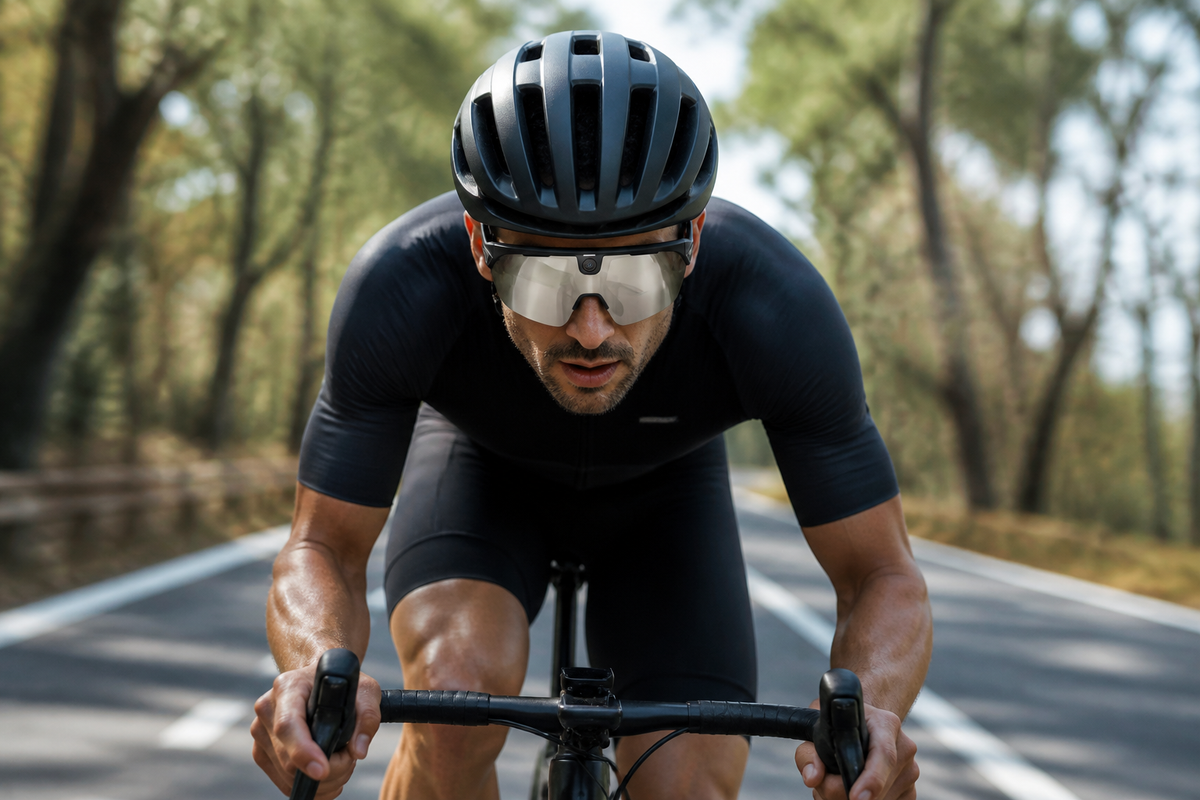
You ride the same route twice a day, five days a week, and record almost none of it — which makes the commute the highest-value, lowest-effort recording session most cyclists have access to.
There is a strange asymmetry in how cyclists record. A Sunday ride gets a camera. The commute — the same distance, repeated two hundred times a year, on roads with the most traffic — gets nothing, because setting up a camera twice a day is two minutes you will not spend.
That is precisely the case for a camera you wear rather than mount. There is no setup, no teardown, and no decision at 7:40 in the morning when you are already late.
What commute footage is actually for
Four reasons people record a commute, in rough order of how often they turn out to matter.
Evidence. If something happens — a close pass, a collision, a dispute about who was where — an eye-level recording shows what you saw, in the order you saw it. That is different from a helmet camera pointed at the road ahead, because it also captures the mirror checks and the shoulder look that show you did what you were supposed to.
Route review. Commutes feel fixed but are not. Watching one back at normal speed shows the three junctions where you are consistently in the wrong lane, the door zone you keep drifting into, and the left turn you take too early every time. This is the least glamorous use and the one that actually changes your riding.
A record of conditions. The pothole that has been there for eight months, the temporary closure, the junction where the light timing changed. Useful when you report something, and useful when you are deciding whether a route is still worth riding.
Sharing. The descent, the sunrise, the ridiculous headwind. Not why anyone starts, but it is why the camera stays on.

The setting that matters when something goes wrong
This is where a modern camera pair of glasses differs from a decade of "just leave it recording" advice.
Rover's cycling hazard detection watches for the events that precede most incidents: a hard braking event, a crash, a hazard on the road ahead. When it triggers, the glasses start recording — and keep the seconds *before* the trigger, roughly ten of them, so the footage begins before the moment rather than after it.
That is the difference between a clip that starts with you already on the ground and a clip that shows the approach. If you have ever tried to reconstruct an incident from memory, you know which one is worth having.
Two honest caveats. It is a cycling-context feature, so it does not apply to a run or a ride where the pattern does not match. And it is an aid, not a guarantee: detection can miss, and it can trigger on a hard stop that was entirely your own doing.
Loop recording matters for the same reason. With loop recording on, the glasses overwrite the oldest footage as storage fills instead of stopping. For a commute that means it keeps working without you thinking about it — and it also means that if you never pull a clip, it is gone.
What it is not
It is not a safety device. A camera does not prevent a collision. Nothing about wearing one changes how a driver behaves, and no footage has ever stopped a car. Treat it as a record, not as protection.
It is not a legal shield. Footage helps; it does not settle fault. Rules about what is admissible, and about filming in public, vary by country and are not something to assume.
It is not a substitute for lights. A camera on your face is invisible to a driver at 40 metres. A rear light is not. If you only have budget for one, buy the light.
Privacy is the part that needs a decision
A commute records strangers: pedestrians on a shared path, drivers, other cyclists, anyone standing at a bus stop. That has consequences that a solo ride on a quiet road does not.
The practical rules most people settle on:
- Record for yourself, not for an audience. Reviewing your own footage is one thing; publishing identifiable strangers is another.
- Blank faces and plates before posting anything. Most phones do this in the edit.
- Do not record in changing rooms, lifts, or anywhere with a reasonable expectation of privacy. Obvious, and still the most common complaint about camera glasses.
- Follow local law. Rules on filming in public and on processing personal data differ substantially between countries, and "it was in public" is not a universal defence.
If you would not be comfortable with the footage being published unedited, do not record in a way that puts it on your phone's camera roll alongside your holiday photos.
Battery maths for a commute
Rover records for about one hour continuously. Most commutes are 20 to 50 minutes, so a round trip does not fit in one charge — but a one-way ride plus a desk charge does.
The rhythm that works:
1. Ride in recording, charge at the desk. A magnetic charging connection takes it to full in about an hour, so it is ready for the ride home. 2. Do not record the whole ride on the way in. Record the part you care about — the junction, the descent, the section where you have had two near-misses. 3. Use 1080p30 when you want the whole trip in one file. It has no per-clip time limit, unlike 3K30 (1, 3 or 5 minutes selectable) and the 60fps modes (fixed at one minute). 4. Pull the footage weekly, not daily. Loop recording means it will be overwritten eventually; a weekly habit is enough for the commute case.
Pick the mode before you put the glasses on. Changing it at a red light with gloves on is how the interesting part gets missed.

Mounted camera vs worn camera on a commute
The comparison is almost entirely about friction, not quality.
A bar or helmet mount takes thirty seconds to attach and thirty to remove, twice a day, and you are carrying a camera in your bag the rest of the time. That is not much — until it rains, or you forget, or you are running for a train.
A bar mount produces a beautifully stable, slightly dull, forward-facing view of exactly the bike's heading. A camera on your face produces a view of what you were looking at, which is less tidy and more informative.
The one category where the mount genuinely wins is long, unchanging distances: a towpath, a closed road, a sportive route. The bike's heading is the right frame there, and the extra stability is worth the setup.
For the general trade-off, see cycling camera mount vs camera glasses. If your riding is mostly hand-signals-and-traffic rather than route recording, camera glasses for cycling hands-free covers the handling side, and camera glasses for cycling routes, commutes and training places the commute next to the other two use cases.
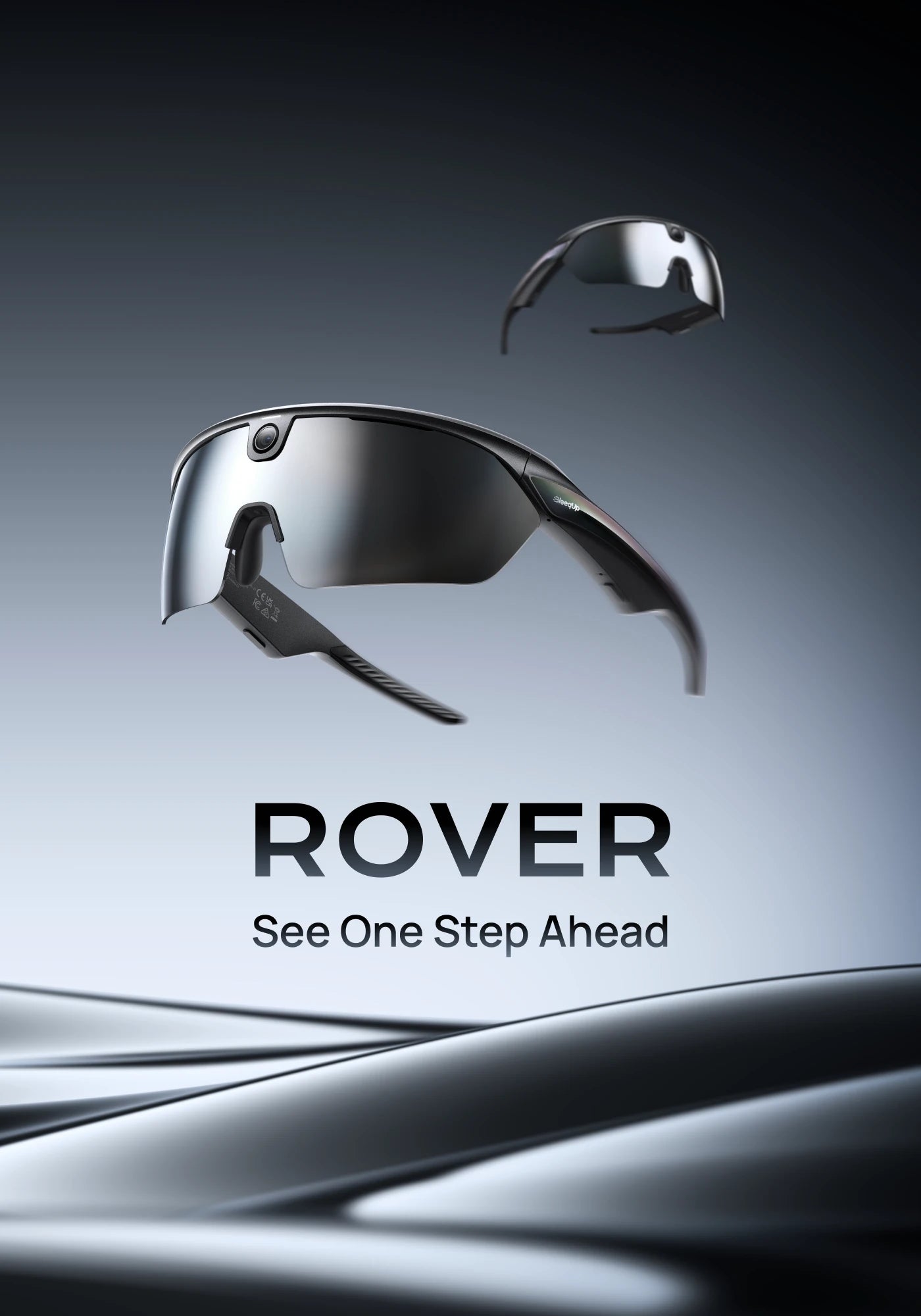
Specifications for Rover — 120° field of view, 3K60 HDR, IP65, 32GB or 64GB — are on the BleeqUp Rover product page.
FAQ
Can I record my whole commute on one charge?
Usually not a round trip. Rover records for about one hour continuously, and a 40-minute commute each way is more than that. Record one direction and charge at your desk — the magnetic connection charges to full in roughly an hour.
Will it record automatically if I have a crash?
Rover's cycling hazard detection can start recording on a crash or a hard braking event and retain roughly the ten seconds before the trigger, provided the feature is enabled. It is an aid rather than a guarantee, and it applies to the cycling context rather than to every activity.
Is it legal to film my commute?
Rules differ by country. Filming in public is generally permitted in many places, but publishing identifiable people and processing personal data are separate questions with separate answers. Follow local law, and blank faces and number plates before sharing anything.
What mode should I use for a full commute?
1080p30, if you want the whole ride in one file without a per-clip limit. For a specific section you intend to review closely, 3K60 gives the best image and one-minute clips; 3K30 offers 1, 3 or 5 minute clips and a good middle ground.
Does a camera make commuting safer?
No. A camera records; it does not prevent. It has no effect on how other road users behave, and it is not a substitute for lights, a helmet or riding defensively. It is useful afterwards, not during.